
Carving Begins at Mount Rushmore
On October 4, 1927, carving began on Mount Rushmore in South Dakota's Black Hills. Sculptor Gutzon Borglum directed a project that eventually produced the faces of George Washington, Thomas Jefferson, Abraham Lincoln and Theodore Roosevelt.
Published · Updated · 3 min read
Work Begins on the Granite
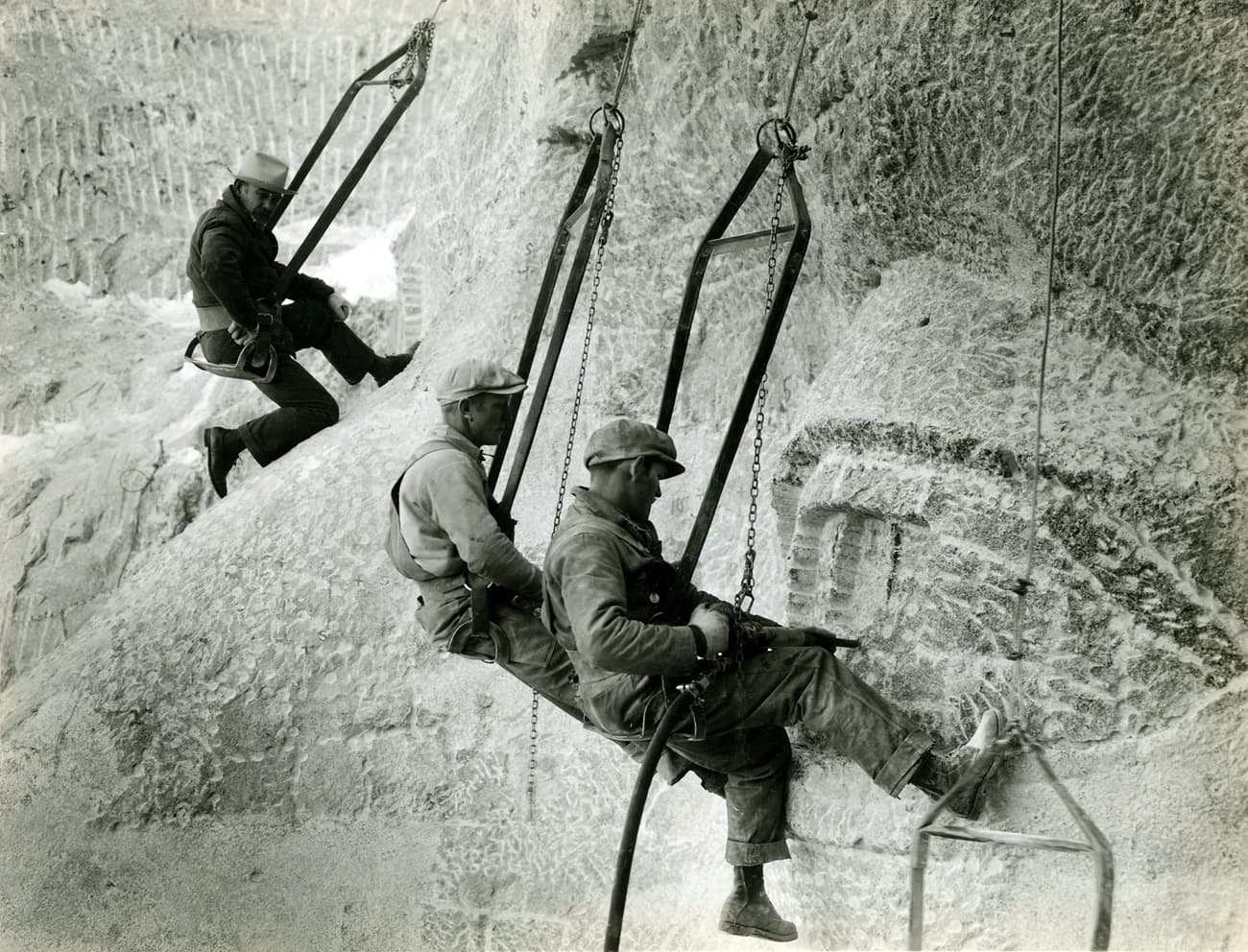
On October 4, 1927, carving began on Mount Rushmore in South Dakota's Black Hills. Sculptor Gutzon Borglum directed a project that eventually produced the faces of George Washington, Thomas Jefferson, Abraham Lincoln and Theodore Roosevelt. At the beginning, the famous arrangement was an intended composition rather than a recognizable feature of the mountain. Workers had to gain access to the face, move tools and supplies, and remove rock at an enormous scale. The first day marked the opening of a construction campaign that would continue, with interruptions, until 1941.
From a State Proposal to a National Subject
South Dakota historian Doane Robinson promoted a large carving as a way to attract visitors. Early ideas involved figures connected with the history of the West. Borglum wanted a subject of national reach and a location where suitable granite could support the design. The choice of presidents produced an argument in stone about the growth and endurance of the United States. It also made the monument a federal interest. Funding and design decisions continued after work began, so the finished faces should not be read as the literal execution of one unchanging sketch.
How Workers Made a Portrait at Mountain Scale
Workers used explosives to remove much of the rock, then drills and other tools to shape the remaining surfaces. Measurements transferred the proportions of models to the mountain, where a small mistake could require substantial correction. The quality of the granite affected the layout. An early location for Jefferson's face was abandoned and the portrait moved. Workers hung on cables and platforms, often exposed to changing weather. The finished monument hides much of that process, but historical photographs make clear how much of the work involved access, measurement and the controlled removal of material.
The Black Hills Were Already a Contested Place
The Black Hills have deep significance for the Lakota and other Indigenous peoples. The 1868 Treaty of Fort Laramie recognized a large reservation that included the Black Hills, and the United States later took the area after gold discoveries and renewed conflict. The dispute continued long after the carving. A monument that presents presidential decisions as national achievements occupies land whose acquisition is itself contested. That setting belongs in the history of the work. It explains why the same mountain can embody very different accounts of American expansion and authority.
The Faces That Were Finished
Gutzon Borglum died in 1941, and his son Lincoln oversaw the final months of work. The presidents were not carved to the full scale originally imagined in some plans. What visitors see today reflects the constraints of rock, money and time as well as artistic intent. October 4 is significant because it marks the point when a disputed landscape and a proposed national image became physically linked. The carving can be understood as a feat of skilled labor while its subject and location remain open to historical argument.
Sources
- Timeline - Mount Rushmore National Memorial (U.S. National Park Service) — National Park Service
- Historical Letters and Legislation - Mount Rushmore National Memorial (U.S. National Park Service) — National Park Service
- Carving History - Mount Rushmore National Memorial (U.S. National Park Service) — National Park Service
- Treaty of Fort Laramie (1868) — U.S. National Archives
Found an error? Send a correction. Read our editorial standards.