
The Washington Monument Opens to the Public
On October 9, 1888, the Washington Monument opened to the public. The obelisk had already been completed and formally dedicated, and visitors could now experience it as a place to enter and ascend.
Published · Updated · 3 min read
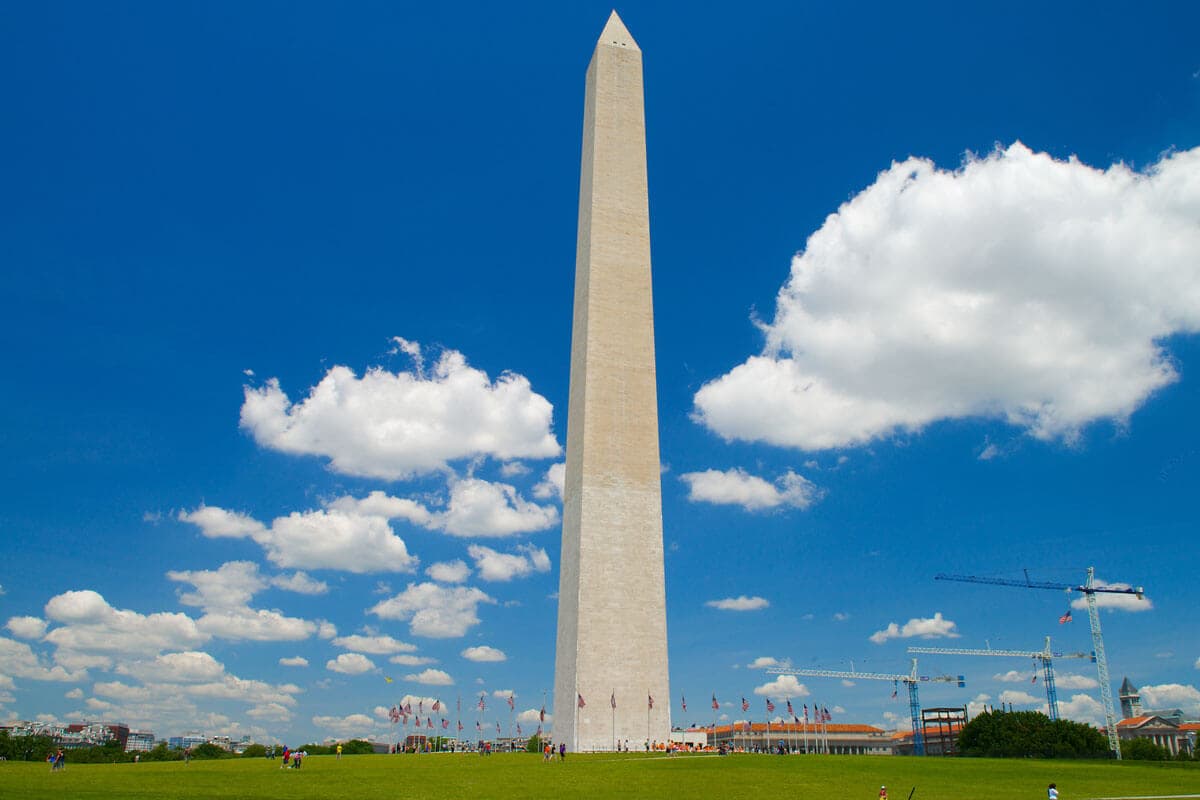
An Opening After the Dedication
On October 9, 1888, the Washington Monument opened to the public. The obelisk had already been completed and formally dedicated, and visitors could now experience it as a place to enter and ascend. The distinction helps explain why several dates appear in its history. Laying a cornerstone, placing the capstone, dedicating the structure and opening it to ordinary visitors were separate milestones. The public opening was the moment when the monument acquired a daily role in the life of the capital beyond its ceremonial appearance on the skyline.
A Design That Outlasted Its Sponsors
The Washington National Monument Society raised money for a memorial to George Washington and chose a design by Robert Mills. His proposal included features around the base that were never built. Construction began in 1848, but fundraising and political problems interrupted work, and the unfinished shaft stood through the Civil War. By the time construction resumed under federal direction, the building program had changed. The completed monument was a simpler obelisk. Its shape emerged from a long negotiation between design ambition, available money and the practical need to finish a very tall masonry structure.
The Stone Tells the Timeline
The change in stone color partway up the exterior is one of the building's most visible historical clues. Work resumed with stone whose appearance differed from the material in the earlier section. The seam survives because construction was interrupted long enough for supply arrangements to change. Inside the monument, commemorative stones from states and other donors add another kind of record. They belong to a national memorial project in which people and institutions far from Washington could contribute a physical object, even when responsibility for completing the whole structure remained uncertain.
What Visitors Could See
An ascent turned the grounds and streets of Washington into a landscape that could be read from above. From the windows, visitors could place distant buildings in relation to the river and the open land around the monument. The view of 1888 should not be imagined as today's National Mall. Later memorials and landscaping had not yet taken their familiar forms. The public experience therefore included a capital still changing around a structure that had itself been under construction, in one phase or another, for much of the previous forty years.
A Memorial Becomes a Public Place
Visitors who saw the obelisk from the ground encountered a distant landmark. Those who entered it also encountered stairs, an elevator, inscriptions and a view framed by the building's own masonry. Opening day made those experiences part of the monument's purpose. The differences between the 1884 completion, the 1885 dedication and the 1888 opening are small compared with the whole construction history, but each answers a different question. October 9 is the date when the finished memorial became a destination the public could use.
Sources
Found an error? Send a correction. Read our editorial standards.