
The Battle of the Thames
On October 5, 1813, American forces defeated British troops and their Indigenous allies at the Battle of the Thames. Shawnee leader Tecumseh died in the fighting, dealing a devastating blow to his Indigenous confederacy.
War on the Northern Frontier
During the War of 1812, American and British forces struggled for control of the Great Lakes region. Tecumseh and his Indigenous allies fought alongside the British while pursuing their own goal of defending Indigenous homelands against American expansion.
The British Retreat
After the American victory on Lake Erie in September 1813, British commander Henry Procter abandoned Detroit and retreated into Upper Canada. American troops under William Henry Harrison pursued his forces along the Thames River.
The Stand at Moraviantown
On October 5, British troops and Indigenous warriors took defensive positions near Moraviantown. Exhausted by the retreat and short of supplies, they faced a larger American force.
The Mounted Attack
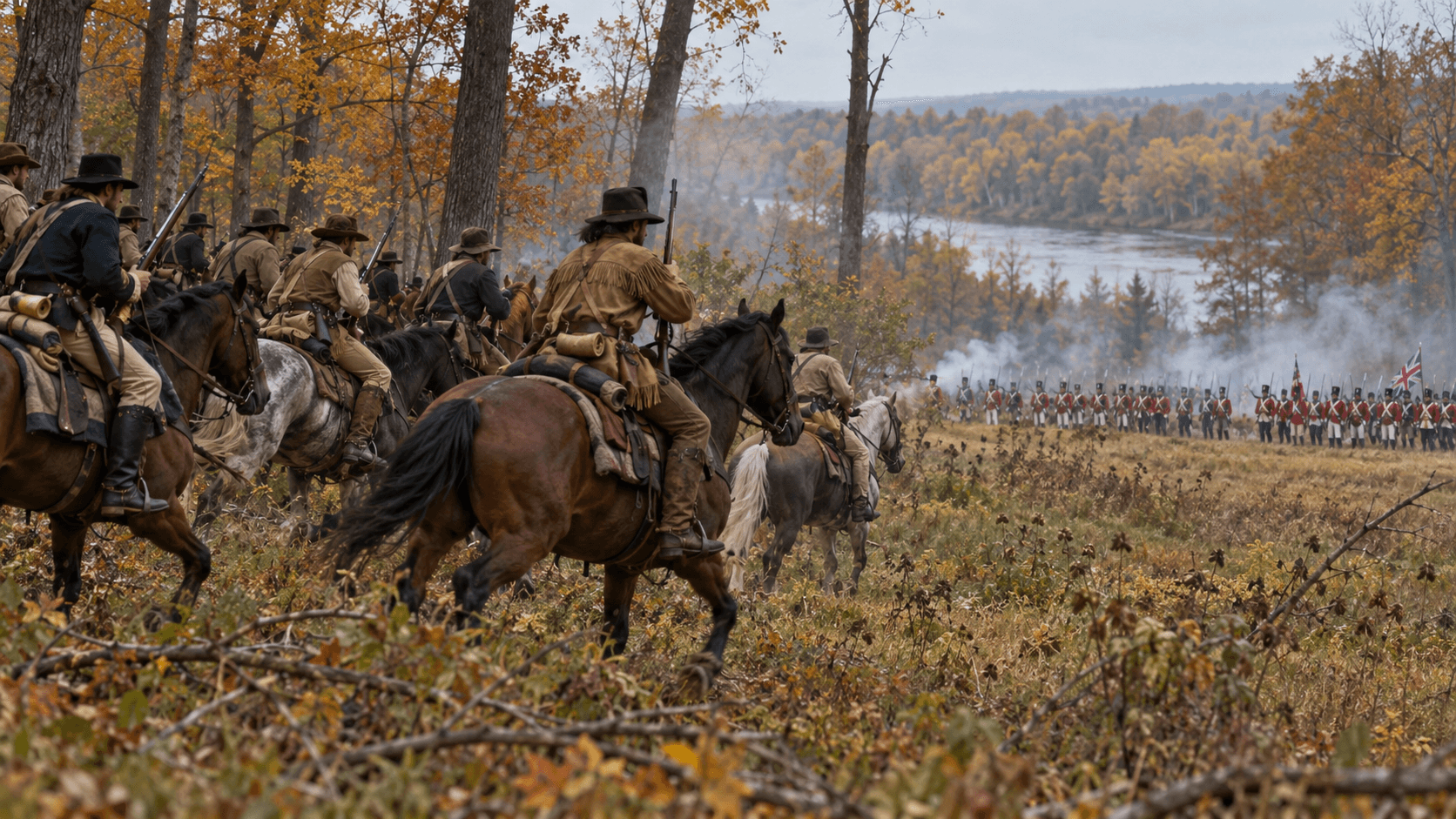
Mounted Kentucky troops broke through the British line, and many British soldiers surrendered. Fighting continued against the Indigenous warriors holding their positions in the nearby woodland.
Tecumseh Falls
Tecumseh died during the battle. The precise circumstances of his death remain uncertain. His loss severely weakened the confederacy he had worked to build among Indigenous nations.
A Lasting Turning Point
The American victory strengthened U.S. control of the northwestern frontier. For Indigenous peoples, the battle marked a devastating setback in their struggle to protect their lands and political independence.
Timeline
1813-09-10 — The American victory at the Battle of Lake Erie undermines British control of the region.
1813-10-05 — Harrison's forces defeat British troops and their Indigenous allies at the Battle of the Thames.
1813-10-05 — Tecumseh dies in the fighting, dealing a severe blow to his Indigenous confederacy.
Location
Near Moraviantown, present-day Ontario, Canada