
USS Nautilus Joins the Navy
On September 30, 1954, USS Nautilus entered service as the world’s first nuclear-powered submarine, opening a new chapter in naval history.
A New Era at the Pier
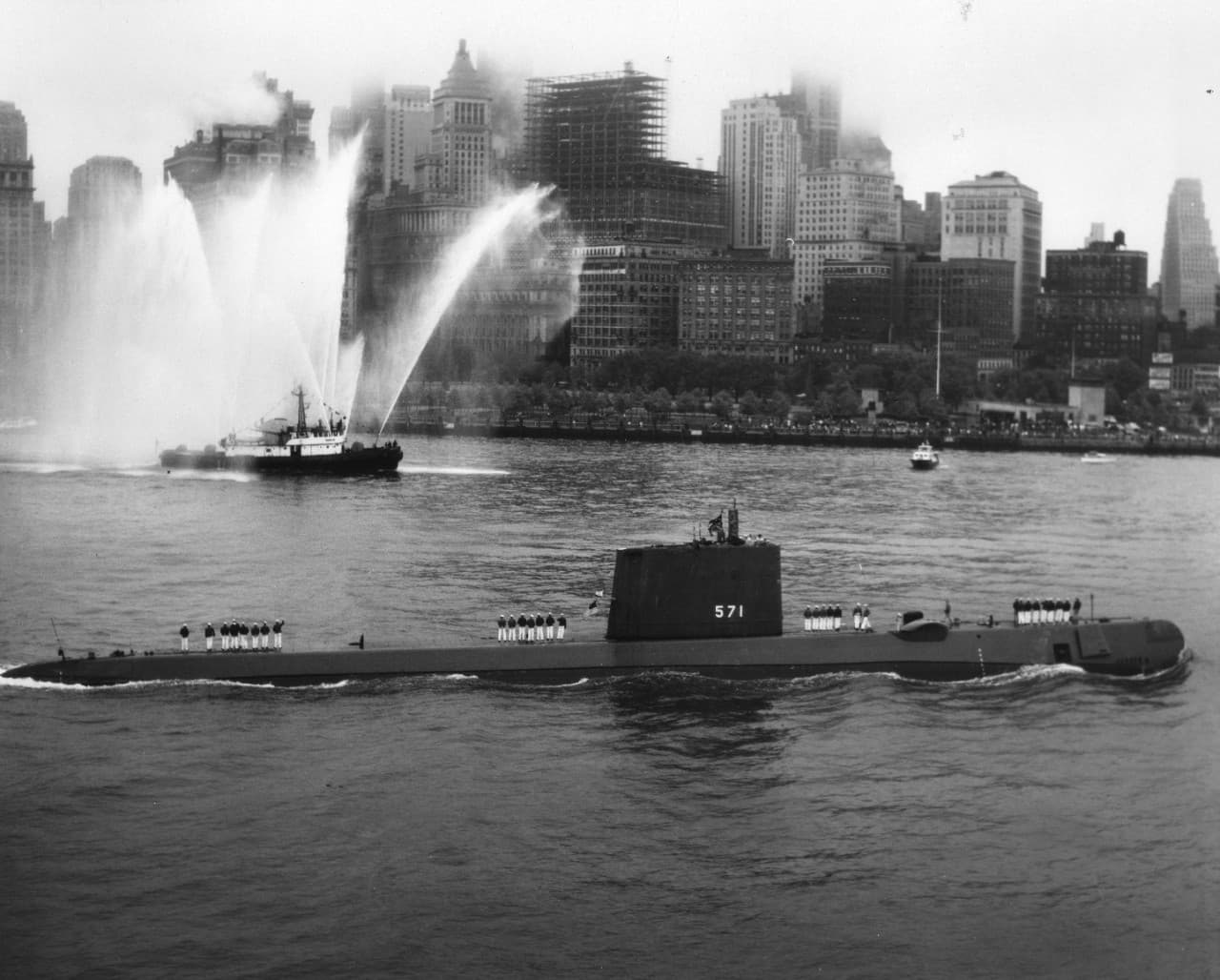
On September 30, 1954, officers, sailors, and guests gathered in Groton, Connecticut, for the commissioning of USS Nautilus. With Commander Eugene P. Wilkinson in command, the submarine officially joined the United States Navy. Its designation was SSN-571, but its significance reached far beyond a hull number: Nautilus was the world’s first nuclear-powered submarine.
Changing What a Submarine Could Do
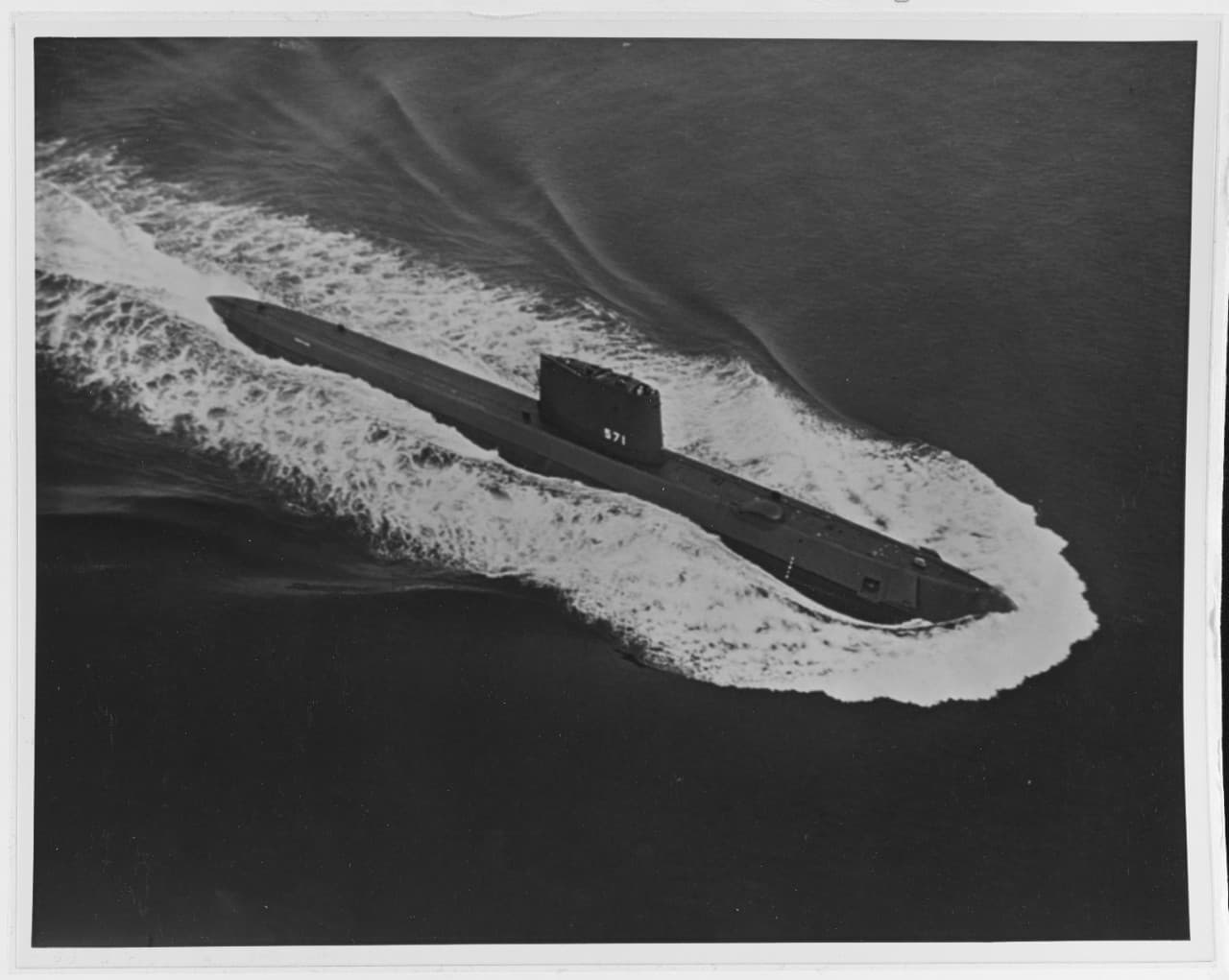
Earlier submarines relied largely on diesel engines and batteries. Their underwater endurance was limited by stored electrical power, and operating their diesel engines required access to air. Nuclear propulsion offered a fundamental change. A reactor could supply energy without consuming atmospheric oxygen, allowing a submarine to remain submerged much longer.
From Ambition to Construction
Congress authorized Nautilus in 1951. Its keel was laid at the Electric Boat shipyard in Groton on June 14, 1952, with President Harry S. Truman participating in the ceremony. The project brought together shipbuilders, engineers, and the naval nuclear propulsion program associated with Hyman G. Rickover. They were creating a vessel that would test an entirely new approach to operating beneath the sea.
Launched, Then Commissioned
First Lady Mamie Eisenhower christened Nautilus when it was launched on January 21, 1954. The commissioning ceremony followed that September. These were separate milestones: launching placed the vessel in the water, while commissioning brought it into naval service. The submarine still had preparations and testing ahead before beginning its historic operations.
Underway on Nuclear Power
On January 17, 1955, Nautilus got underway using nuclear power. The message from the submarine was brief and historic: 'Underway on nuclear power.' What had been an engineering promise was now a working reality. Subsequent operations demonstrated how nuclear propulsion could extend underwater endurance and transform submarine capabilities.
Beneath the North Pole
In August 1958, Nautilus achieved another milestone by traveling beneath the Arctic ice and reaching the geographic North Pole. The voyage demonstrated the possibilities of sustained underwater navigation in a region that presented extraordinary challenges. The submarine commissioned in Groton less than four years earlier had become a symbol of a new naval age.
A Preserved Chapter of History
Nautilus was decommissioned in 1980 and later preserved as a museum ship in Groton. Its story connects Cold War history with a major technological breakthrough. The ceremony of September 30, 1954, marked the beginning of a career that would change expectations of what submarines could accomplish.
Timeline
1951 — Congress authorizes construction of USS Nautilus.
1952-06-14 — The submarine’s keel is laid in Groton, Connecticut.
1954-01-21 — Mamie Eisenhower christens Nautilus at its launch.
1954-09-30 — USS Nautilus is commissioned into the United States Navy.
1955-01-17 — Nautilus gets underway on nuclear power.
1958-08-03 — Nautilus reaches the geographic North Pole beneath the Arctic ice.
1980-03-03 — USS Nautilus is decommissioned.
Location
Groton, Connecticut, United States