
Cabrillo Enters San Diego Bay
On September 28, 1542, ships under Juan Rodríguez Cabrillo entered the sheltered waters now known as San Diego Bay. The expedition was sailing for the Spanish Crown, and its surviving account makes this the earliest documented European encounter with the harbor.
Published · Updated · 3 min read
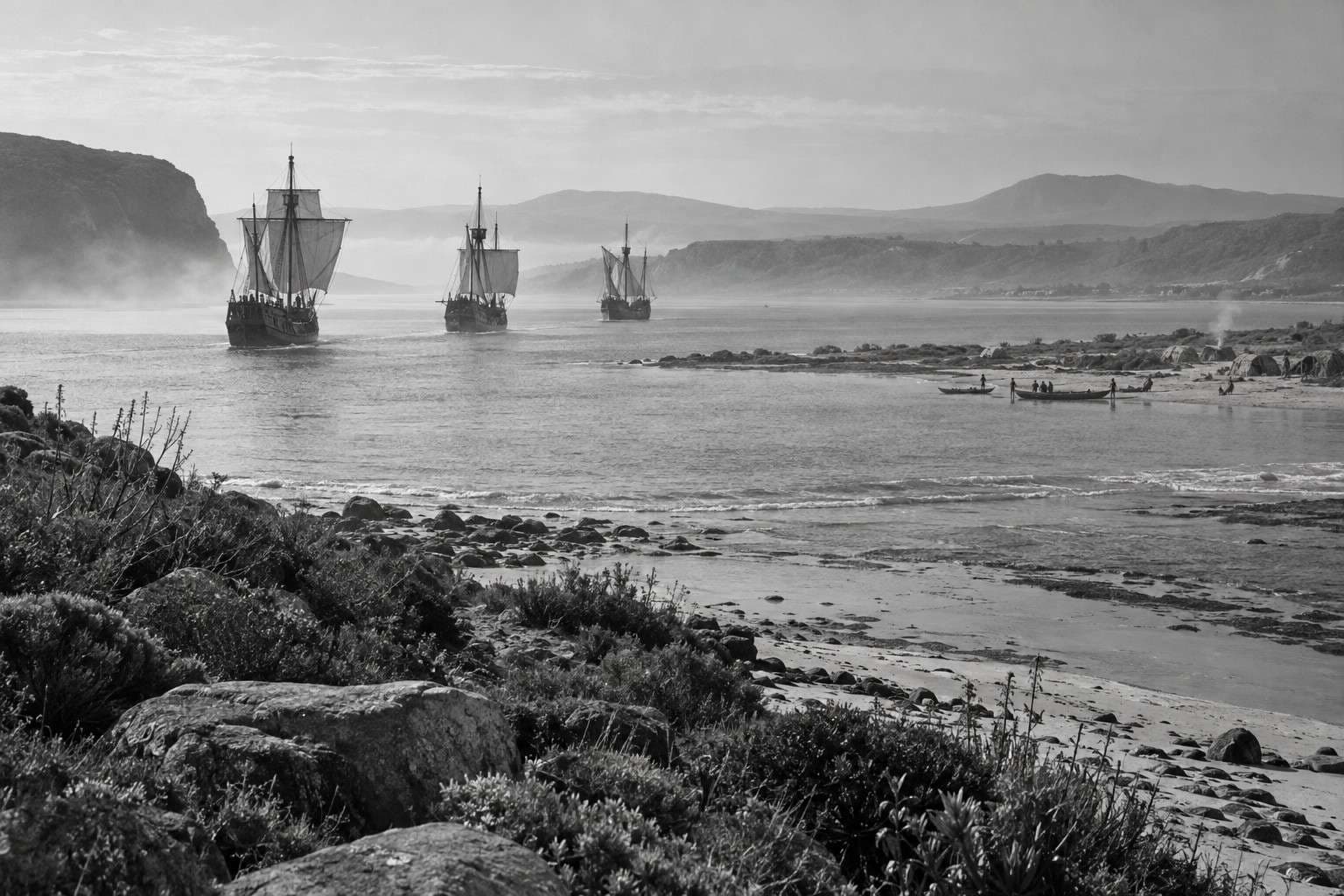
A Harbor With a History
On September 28, 1542, ships under Juan Rodríguez Cabrillo entered the sheltered waters now known as San Diego Bay. The expedition was sailing for the Spanish Crown, and its surviving account makes this the earliest documented European encounter with the harbor. For the Kumeyaay people, whose communities had long occupied the region, the arrivals were strangers at a familiar place. The difference matters: an entry in a European voyage record marks the beginning of one archive, while the coast itself already had a history, inhabitants and names.
Up the Coast From Navidad
Cabrillo had sailed from Navidad on the Pacific coast of what is now Mexico in June. His vessels worked north from a region already under Spanish colonial rule into waters much less familiar to the expedition. The search was partly geographical and partly imperial: a usable harbor, a new trading route or information about the lands farther north could all matter to officials in New Spain. The fleet did not need to find a passage across the continent for its observations of anchorages and coastlines to have value.
Reading the Landing Account
The bay was called San Miguel in the Spanish expedition's record. Its protected waters gave sailors a place to anchor and assess the surrounding shore. The account records Indigenous people in the vicinity, but it tells the encounter from the visitors' perspective. It cannot show what local families thought among themselves or provide a reliable transcript of conversations. Even the identification of a specific modern landing spot depends on comparing descriptions with geography. The core fact is the expedition's arrival in the bay; the exact movements of everyone ashore are less secure.
A Voyage Continued Without Cabrillo
The expedition went on from San Diego, following the California coast and looking for suitable places to stop. Cabrillo died during the voyage, and command passed to Bartolomé Ferrer, whose name is also rendered Ferrelo. The crew continued its exploration before returning south. No Spanish city sprang up on the bay in 1542. The permanent colonial settlement associated with the presidio and mission came much later, in 1769, after a change in imperial priorities and almost two and a quarter centuries after Cabrillo's visit.
What the Monument Commemorates
From Point Loma, modern visitors can see how a vessel approaching from the ocean enters the harbor. That geographic view helps explain the importance of the anchorage better than a scene of flags planted on an empty beach. It also connects two scales of history: the specific journey of a sixteenth century fleet and the much longer life of the surrounding Kumeyaay homeland. Both are needed to tell what happened when Cabrillo sailed into San Diego Bay.
Sources
- Cabrillo Foundation - Cabrillo National Monument (U.S. National Park Service) — National Park Service
- CABRILLO LANDING SITE — California State Parks
- Juan Rodriguez Cabrillo - Cabrillo National Monument (U.S. National Park Service) — National Park Service
- Kumeyaay - Cabrillo National Monument (U.S. National Park Service) — National Park Service
Found an error? Send a correction. Read our editorial standards.