
Chicago After the Fire: From Burned Blocks to a New Skyline
A photograph taken after the 1871 fire can make Chicago look as though its future had been decided by a wall of flame. A view from around 1905 tells a different story: tall offices, busy transport routes and commercial streets crowded again.
Published · Updated · 3 min read
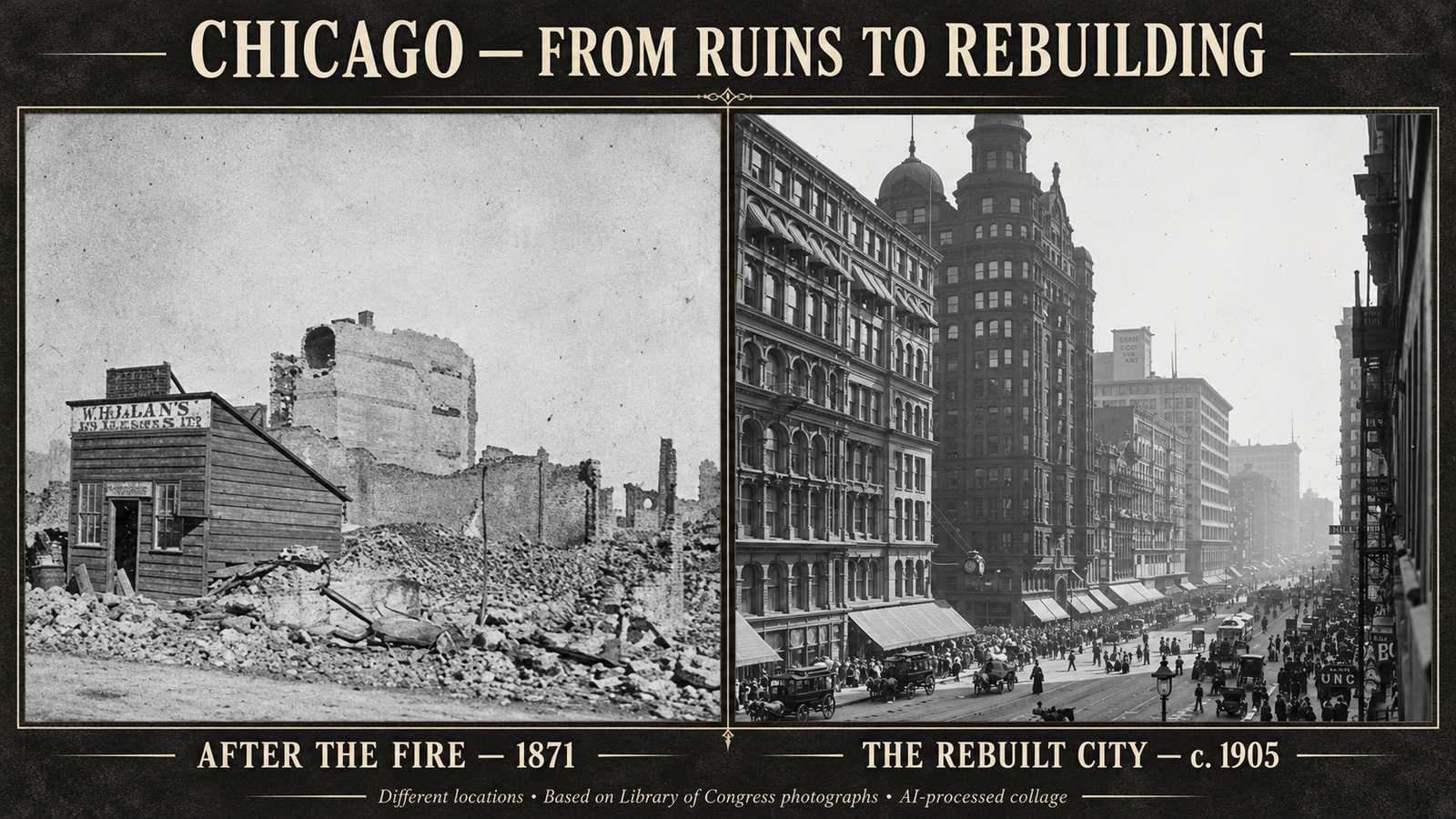
One City, Two Very Different Views
A photograph taken after the 1871 fire can make Chicago look as though its future had been decided by a wall of flame. A view from around 1905 tells a different story: tall offices, busy transport routes and commercial streets crowded again. The images bracket more than thirty years of work. October 8, 1871, is the starting date of this comparison, not the date of a finished reconstruction. The city that emerged owed as much to later investment, population growth and building technology as it did to any immediate decision made after the fire.
What Returned First
Businesses and households first needed ways to trade, work and find shelter. Temporary accommodations could put an enterprise back in operation before permanent offices existed. Rail connections, commercial relationships and activity outside the burned area gave Chicago reasons to rebuild in place. New construction did not erase all the hardship the fire created, and the speed with which prominent businesses returned should not be used to measure how quickly families regained stable housing. The physical city recovered at different speeds depending on what was being replaced and who could pay for it.
Building Rules and Their Costs
The fire raised questions about the use of wood and the reach of fire limits. Masonry could help reduce certain kinds of fire spread, but changing the rules also changed the price of a legal house. Owners and workers with modest resources faced a different set of choices from downtown merchants. A more expensive building standard could move people or construction beyond a regulated area rather than ending the demand for inexpensive housing. The shape of the rebuilt city reflected political decisions about which risks were acceptable and who would bear the cost of reducing them.
Why the Skyline Went Up Later
The first rebuilding restored much of the street economy. The tall commercial buildings now associated with Chicago developed in later decades, as high central land values met changes in framing, elevator service and construction. The Home Insurance Building of the 1880s belongs to this later story. So do engineering challenges posed by foundations and the difficulty of making taller buildings convenient to occupy. The fire did not invent the skyscraper. It cleared particular blocks in a city whose later growth created demand for more floor area on sites near the center.
Comparing Photographs Without Misreading Them
A useful comparison identifies the street, camera direction and approximate date before interpreting what changed. A picture of a burned business district and an image of a different neighborhood can both be real while making a misleading pair. Surviving street lines, bridge approaches and building sites provide stronger anchors. They show what persisted while the structures above them changed. Chicago around 1905 was neither a faithful restoration of the city that burned nor an instant response to the fire. It was the product of several rounds of rebuilding and expansion.
Sources
Found an error? Send a correction. Read our editorial standards.