
Eugene Ely Takes Off From USS Birmingham
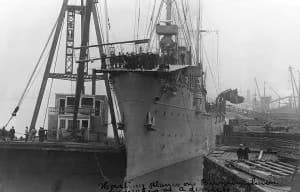
On November 14, 1910, civilian pilot Eugene Ely flew a Curtiss pusher biplane from a wooden platform built over the bow of the cruiser Birmingham in Hampton Roads, Virginia. The ship lay at anchor.
Published · Updated · 3 min read
A Runway Made for One Experiment
On November 14, 1910, civilian pilot Eugene Ely flew a Curtiss pusher biplane from a wooden platform built over the bow of the cruiser Birmingham in Hampton Roads, Virginia. The ship lay at anchor. Naval officers were looking at a possibility that had barely been demonstrated: an aircraft might be operated from a warship rather than sent out from a field on shore. The platform was a temporary structure about eighty three feet long. It gave Ely only a short distance to accelerate before the aircraft reached open water.
Aircraft and Ship Had to Meet Halfway
The cruiser had not been designed as an airfield. Shipwrights had to create a usable surface without rebuilding the vessel, and the plane was lifted aboard before the attempt. Ely's aircraft had floats as a precaution, but its basic form was a light early biplane with the propeller behind the pilot. An experimental flight depended on several people preparing separate systems: carpenters, sailors, officers and aircraft mechanics all had work to do before Ely could decide whether conditions were good enough to go.
A Launch That Nearly Ended in the Water
Fog and rain complicated the plan. When Ely finally started, the aircraft left the sloping platform and dropped low enough to touch the water. It recovered, although the propeller sustained slight damage. Ely landed on Willoughby Spit after traveling only a few miles. The short route does not diminish the result. The experiment asked whether the aircraft could get clear of the ship and fly under its own power. The water contact showed at once how little margin the platform and aircraft had given him.
The Missing Half of the Operation
Taking off still left a ship with no way to recover its aircraft. In January 1911, Ely approached USS Pennsylvania in San Francisco Bay and landed on a temporary deck. Arresting equipment helped stop the plane within the available distance. He later took off again. The two experiments addressed different problems, which explains why the dates and ships should not be combined. Birmingham belongs to the November launch; Pennsylvania belongs to the January landing and subsequent takeoff. Neither ship was then operating as a purpose built fleet carrier.
An Early Link in a Longer History
Ely's flight established a limited fact with large implications. A warship could provide a platform for a plane even when no runway existed nearby. Regular naval aviation would also require predictable landing procedures, suitable ships, training, maintenance and aircraft designed for deck work. A temporary bow platform made the first question testable while leaving those larger questions open. The episode is best understood through the oddity of the equipment itself: an ordinary cruiser briefly carried a wooden ramp because the Navy was learning what kind of ship it might someday need.
Sources
Found an error? Send a correction. Read our editorial standards.