The Great Chicago Fire: How the Flames Spread and a Legend Took Hold
On October 8, 1871, a fire began on Chicago’s West Side. It devastated the city, left approximately 100,000 people homeless and produced a lasting myth about its cause.
Published · Updated · 2 min read
A fire near DeKoven Street
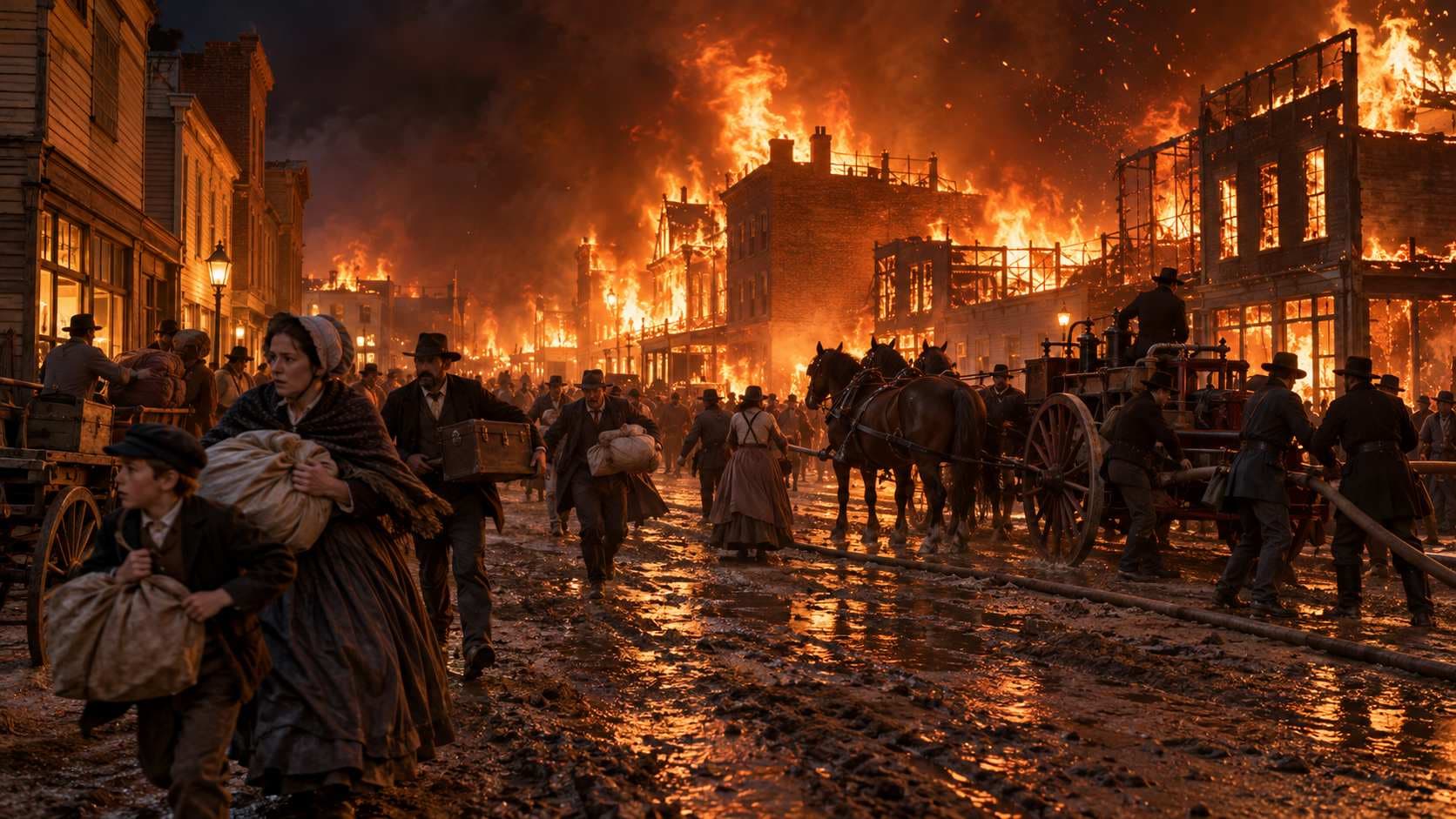
On the evening of October 8, 1871, fire broke out on Chicago’s West Side. The subsequent official investigation identified a barn on Patrick O’Leary’s property near DeKoven Street as the starting location. Investigators did not establish what ignited it. Knowing where a fire began is different from knowing its cause.
Why the city was vulnerable
Extremely dry conditions, powerful winds and abundant combustible material helped the blaze spread. The disaster cannot be explained solely by the first ignition. Once flames escaped the initial property, conditions across the city allowed additional buildings to catch fire faster than firefighters could contain them.
Embers carried the danger ahead
The Encyclopedia of Chicago describes separate fires started by airborne burning fragments that eventually merged. Embers reached locations beyond the original blaze, including across the river. This explains why a waterway did not necessarily stop the destruction: fire could leap a barrier by igniting material on the other side.
From an evening alarm to a citywide catastrophe
The fire continued through October 9, devastating the central business district and large parts of the North Side. Rain helped extinguish the remaining flames by October 10. The National Archives estimates approximately 300 deaths and reports that roughly one-third of Chicago’s residents lost their homes.
The cow story outran the evidence
A newspaper account blamed a cow for overturning a lamp at the O’Leary property. Catherine O’Leary testified during the inquiry that she had been in bed and did not know how the fire began. The U.S. Census Bureau notes that no evidence linked her to causing it. Nevertheless, the accusation became embedded in popular accounts.
A misleading explanation with a human cost
The Census Bureau connects O’Leary’s treatment to anti-Irish and anti-immigrant prejudice. The story supplied a memorable culprit while obscuring uncertainty about the ignition. A responsible reconstruction should therefore show the documented fire and its spread without presenting a cow or overturned lantern as established history.
Relief began while displacement continued
The Library of Congress chronology records that President Ulysses S. Grant ordered donations sent to Chicago on October 10. Some business activity resumed on October 12, and temporary accommodation was being erected by October 17. These early recovery efforts coexisted with approximately 100,000 people remaining homeless.
Sources
- 150 Years Ago: The Great Chicago Fire — National Archives
- Progress of the Chicago Fire of 1871 — Encyclopedia of Chicago
- The Official Report — The Great Chicago Fire & The Web of Memory
- October 2021: The 1871 Great Chicago Fire — U.S. Census Bureau
- Great Chicago Fire of 1871: Historical Timeline — Library of Congress
Found an error? Send a correction. Read our editorial standards.