The Peshtigo Fire: The Deadlier Disaster on Chicago’s Darkest Night
On October 8, 1871, fire devastated Peshtigo and surrounding communities in Wisconsin. An estimated 1,200 to 2,400 people died across the affected area.
Published · Updated · 2 min read
A disaster beyond Chicago
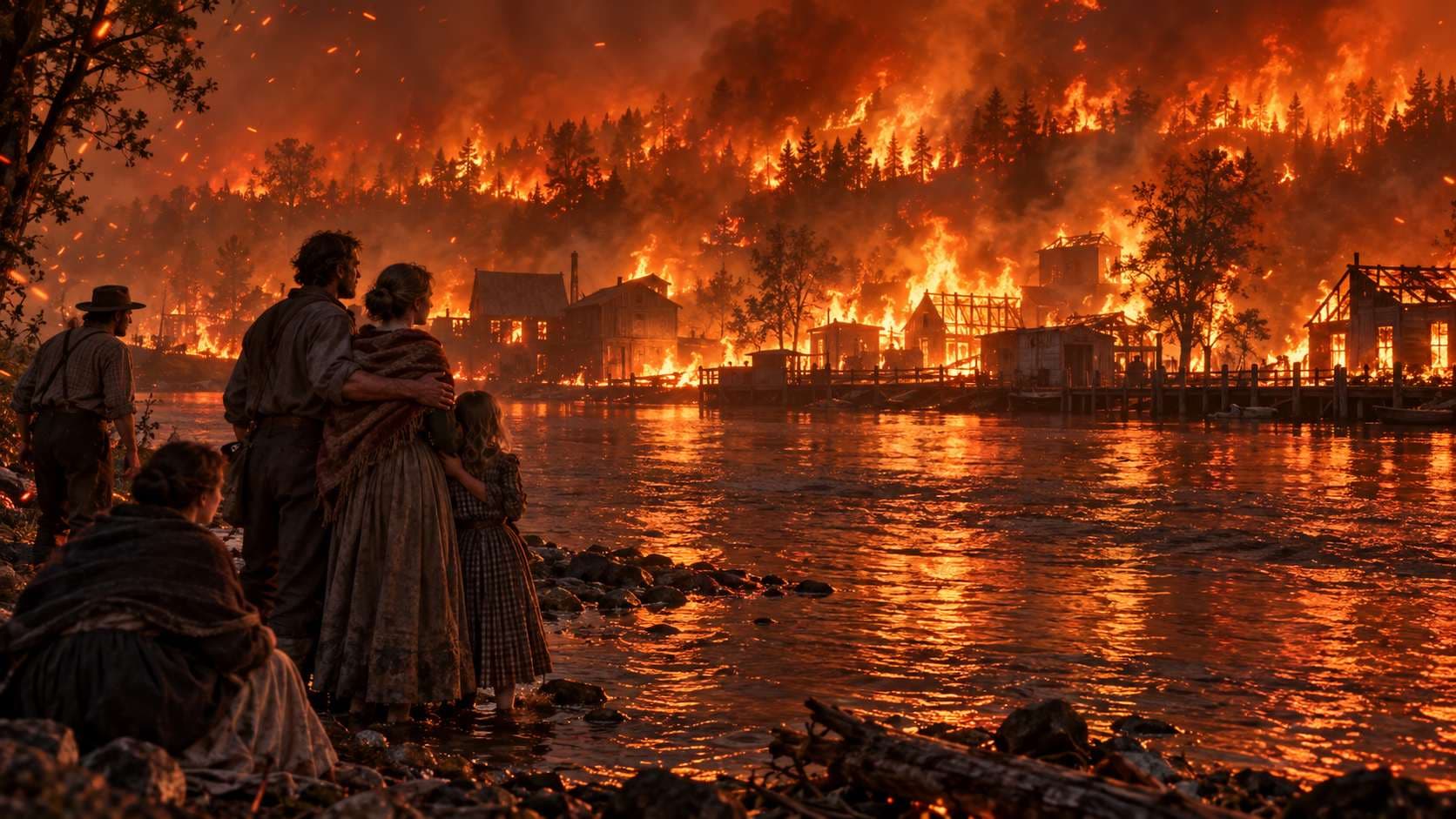
On October 8, 1871, while Chicago’s famous fire was beginning, another catastrophe struck northeastern Wisconsin. Fire reached Peshtigo that Sunday evening and devastated the town and surrounding communities. The National Weather Service identifies it as the deadliest fire in American history.
The region was already burning
The Library of Congress places Peshtigo within a broader outbreak of destructive fires in Wisconsin and Michigan. Holland, Manistee and Port Huron were among the affected communities. Forests had been burning before October 8, so the disaster was not simply one isolated town fire appearing without warning.
Weather made the danger worse
Very low rainfall, unusually warm October conditions and strong winds created a dangerous combination. Dry vegetation supplied fuel, while wind helped fires spread. These regional conditions explain why multiple places could experience severe destruction during the same period without requiring a single shared ignition.
What observations survived
The National Weather Service discusses records from Fort Embarrass, southwest of Peshtigo, describing smoke and smaller fires before the disaster. Its weather reconstruction indicates a strong low-pressure system capable of producing powerful southwesterly winds. Such evidence helps explain the fire environment, even though it cannot identify the origin of every blaze.
Understanding the uncertain toll
The National Weather Service estimates 1,200 to 2,400 deaths across the affected area, including approximately 800 in Peshtigo. The exact total is unknown. The town’s fatalities and the wider regional toll should not be treated as interchangeable figures, and the estimate should remain a range rather than a falsely precise count.
Eyewitness testimony preserves individual experience
Reverend Peter Pernin’s account is an important eyewitness source discussed by the National Weather Service. Survivor testimony can reveal what people encountered and how they sought safety. Its value lies in those experiences; it does not provide a complete register of every person who died.
Why comparing the two fires matters
Chicago’s prominence in public memory can make Peshtigo seem secondary, despite its greater estimated loss of life. Comparing them separates the fame of a disaster from its severity. It also brings rural settlements and surrounding communities into a historical anniversary often illustrated only with a burning city skyline.
Sources
Found an error? Send a correction. Read our editorial standards.