
A Wyoming Discovery Brings the Black-Footed Ferret Back Into View
In September 1981, a ranch dog named Shep brought a dead animal to its owners near Meeteetse, Wyoming. The animal was identified as a black-footed ferret, a North American species that had been widely presumed extinct after the disappearance of previously known animals.
Published · Updated · 3 min read
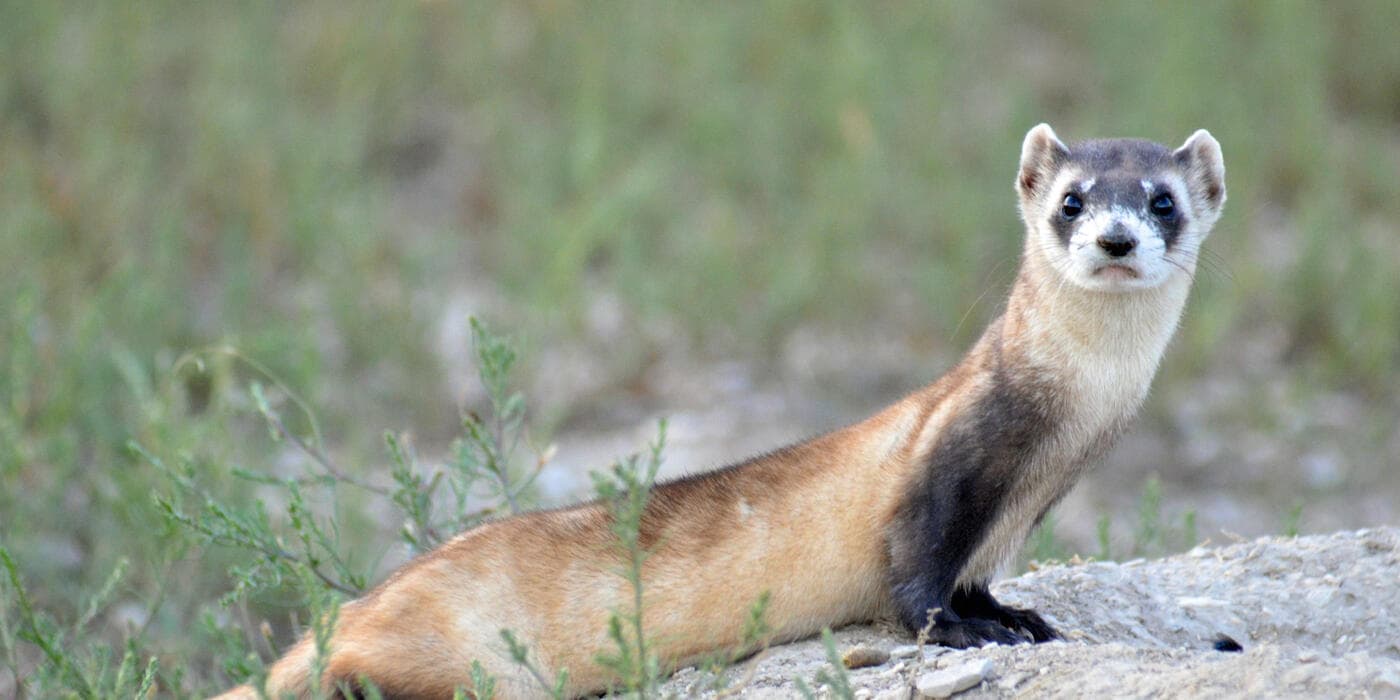
An Unexpected Animal Near Meeteetse
In September 1981, a ranch dog named Shep brought a dead animal to its owners near Meeteetse, Wyoming. The animal was identified as a black-footed ferret, a North American species that had been widely presumed extinct after the disappearance of previously known animals. The date commonly associated with the discovery is September 26. The specimen gave biologists a chance to ask a question they had nearly lost the means of testing: were other ferrets still living nearby? One dead animal could establish recent presence, but it could not establish the size or security of a population.
Why Ferrets Were Hard to Find
Black-footed ferrets hunt prairie dogs and use their burrow systems for shelter. Much of that activity is hard for a casual observer to see, particularly because ferrets are largely nocturnal. The location of prairie dog colonies was therefore a guide to where a search might succeed. It also pointed to a larger conservation problem. The ferrets depended on a prey base and a burrow landscape that could disappear or fragment even when individual animals remained. Rediscovery put an animal back on the map and revealed a living ecological relationship that had to be protected.
The Population Was Real and Still in Danger
Fieldwork located a living population in the Meeteetse area. Disease later struck, creating a new emergency. Conservation workers took surviving animals into captivity in an attempt to prevent the species from vanishing entirely. Captive breeding required healthy animals and enough genetic diversity to establish subsequent generations. The decision reflected how little time the population appeared to have. Leaving every animal in the wild would have preserved a natural setting in the short term, but could also have left no breeding population if disease continued to spread.
From Captive Breeding to Release
Programs bred ferrets and returned animals to selected sites. A release could succeed only where adequate prairie dog colonies, monitoring and disease management were available. Each of those conditions involves other people and institutions, including landowners and agencies responsible for the ground on which prairie dogs live. A higher count in captivity and a stable wild population are different kinds of achievement. The first provides animals for recovery. The second depends on conditions that allow released animals and their descendants to survive without being replaced continually.
What Rediscovery Means Here
It is tempting to end the story when the unusual specimen is identified. In this case the identification was the beginning of a much longer record of surveys, emergency decisions and managed breeding. The ferret's situation shows why a rediscovered species cannot be treated as recovered. A ranch dog revealed that biologists had not seen the last of the species. Keeping it on the landscape required understanding the burrows, prey, diseases and human decisions that would determine whether later generations of ferrets had a place to live.
Sources
- Black-Footed Ferrets: Top Milestones for a Species Once Presumed Extinct — Smithsonian Institution
- U.S. Fish & Wildlife Service — U.S. Fish and Wildlife Service
- Black-Footed Animal, Once Believed Extinct, Has Surfaced in Wyoming; Curiosity-Seekers Head for Meeteetse : Mysterious Ferret Has 'Em Guessing - Los Angeles Times — Los Angeles Times
Found an error? Send a correction. Read our editorial standards.