
The Great Chicago Fire Begins on DeKoven Street
On the evening of October 8, 1871, fire broke out in a barn behind the home of Patrick and Catherine O'Leary on DeKoven Street. The building's location is established more firmly than the cause of ignition.
Published · Updated · 3 min read
A Fire in a Barn
On the evening of October 8, 1871, fire broke out in a barn behind the home of Patrick and Catherine O'Leary on DeKoven Street. The building's location is established more firmly than the cause of ignition. The story that a cow kicked over a lantern became famous, but the available evidence does not establish it. Repeating the accusation as fact shifts attention from the conditions that allowed a neighborhood fire to become a citywide catastrophe. Chicago had endured dry weather, and large areas contained combustible buildings, fences and other wooden structures.
The Route of the Flames
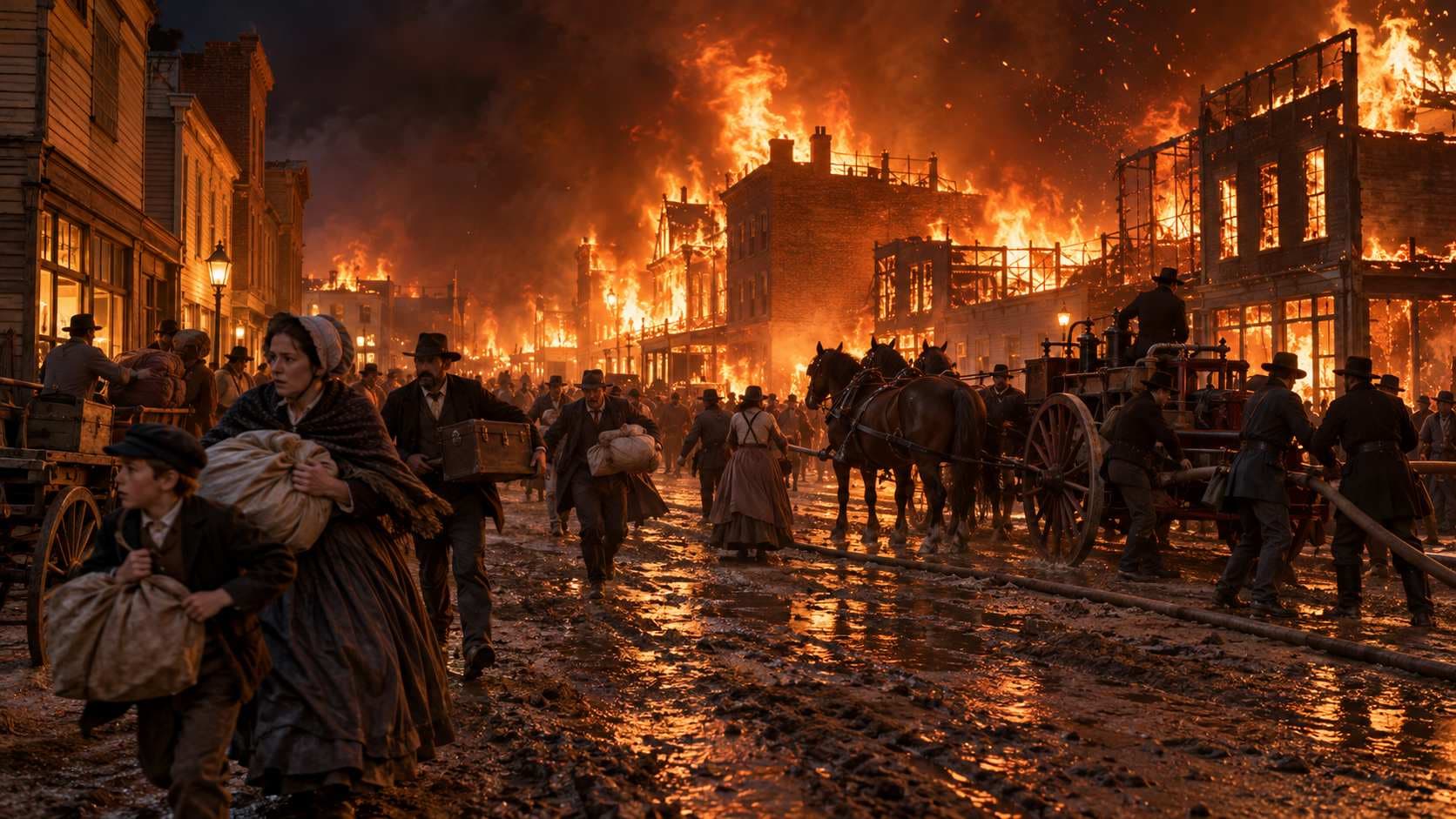
Strong winds carried burning material beyond the first buildings. The fire spread northeast, crossing branches of the Chicago River and moving through the business district toward the North Side. A river offered separation between blocks, but embers could cross it and ignite structures beyond the immediate flame front. Fire companies were already under strain, including from a serious fire the previous night. As the disaster grew, people trying to fight it faced new fires, blocked streets and the loss of infrastructure that should have helped them respond.
A City Trying to Get Out of Its Own Way
Residents fled from homes, shops and hotels, carrying whatever they could. Bridges and roads became routes of escape and places where crowds and vehicles impeded one another. People sought open ground or the shoreline, but the safest direction could change as the fire advanced. The city's waterworks were disabled during the disaster, reducing the capacity to fight the spreading blaze. Accounts of the evacuation differ because a person on one block could see neither the obstacles on the next route nor how quickly conditions were changing elsewhere.
Measuring the Loss
The fire continued into October 10. More than seventeen thousand buildings were destroyed, roughly one hundred thousand people were left homeless, and estimates of the number killed commonly reach about three hundred. Those figures describe distinct losses. A count of buildings says little about how many families occupied them, and the death toll cannot be established with complete precision. Relief meant more than replacing houses. Survivors needed food, clothing, temporary shelter, ways to locate relatives and a means of returning to work after businesses had burned.
The Disaster Behind the Famous Story
The cow legend offered a quick answer to a question for which investigators had no secure answer. It also helped make one household carry blame for a much larger urban failure. The fire's spread is more instructive than that legend: wood, wind, dry conditions, dense development and limited response capacity were all visible before or during the disaster. Remembering DeKoven Street identifies where the fire began. Following what happened beyond the barn explains why so much of Chicago burned.
Sources
Found an error? Send a correction. Read our editorial standards.