
The Night the Peshtigo Fire Overwhelmed a Wisconsin Town
On the night of October 8, 1871, fire swept through Peshtigo, Wisconsin, and surrounding settlements. The town stood in a logging region near Green Bay, where mills, farms and transport routes depended on the clearing and processing of timber.
Published · Updated · 3 min read
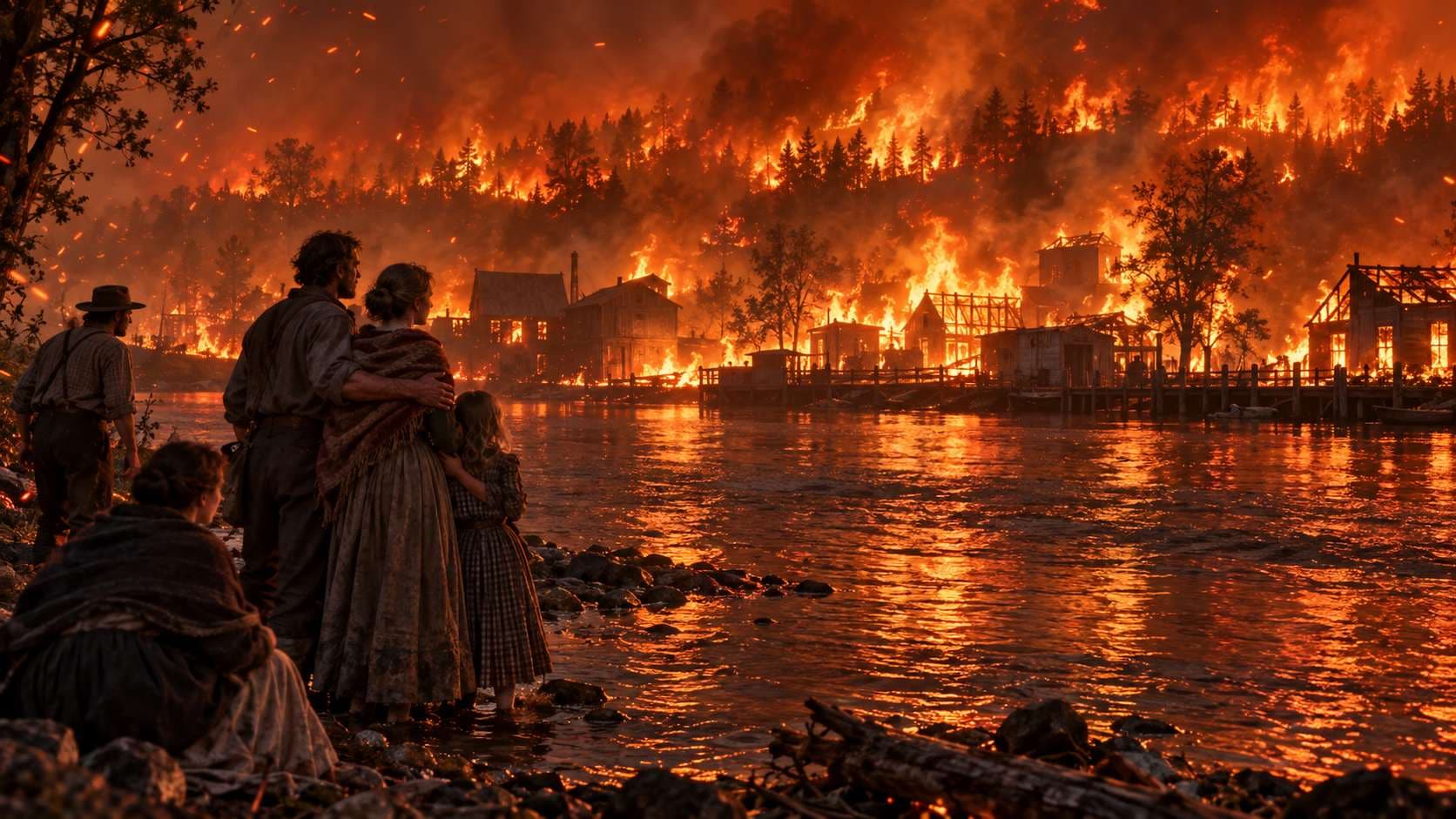
Smoke in a Lumber District
On the night of October 8, 1871, fire swept through Peshtigo, Wisconsin, and surrounding settlements. The town stood in a logging region near Green Bay, where mills, farms and transport routes depended on the clearing and processing of timber. Residents were accustomed to seeing or smelling smaller fires. Months of dry weather had left vegetation and debris vulnerable, however, and a fire that moved across the landscape under strong winds posed a very different threat from an ordinary clearing burn. By the time that difference was obvious, many residents had almost no time to leave.
How a Landscape Became Fuel
Logging left branches, brush and other material on the ground. Settlers also used fire in clearing land. Those facts help explain the presence of many possible fires and fuels, but they do not identify a single ignition responsible for the catastrophe. Intense winds could drive flames and carry burning material into fresh areas. Settlements were linked by roads through woods and fields, so escape from a burning building did not necessarily lead to safety. People could face fire along the route to the next farm or town as well as in the place they were trying to leave.
The River as Refuge
Some people reached the Peshtigo River and tried to survive in or beside the water. Getting into the river meant exchanging heat and smoke for cold, current and exhaustion, often while helping children or other relatives. Others sought open ground, and many never escaped. Survivor accounts give the disaster a geography that totals cannot provide: the distance from a house to the bank, the ability to find a path in smoke, and the length of time people had to remain in dangerous conditions. Each decision was made with incomplete knowledge of where the fire was going.
A Toll Beyond the Town
Deaths occurred in other communities and isolated places, including across Green Bay. Estimates vary because records of scattered settlements were incomplete and some households were lost together. The Wisconsin Historical Society gives an estimate of around fifteen hundred deaths for the disaster. A precise number would imply knowledge that surviving records cannot deliver. The Chicago fire began on the same date, but Peshtigo's story has its own geography and causes. Its larger death toll also shows how difficult it can be for a dispersed rural catastrophe to command sustained national attention.
Recovering Names and Places
Relief and burial work began after a night that had destroyed records as well as buildings. Local accounts, maps and cemetery records now help researchers recover portions of what was lost. The name Peshtigo can refer both to the town and to a fire that affected a much wider district. Keeping that distinction helps restore smaller communities to the account. The essential question is how a familiar working landscape changed so quickly that ordinary paths to shelter, neighbors and water no longer offered a dependable escape.
Sources
Found an error? Send a correction. Read our editorial standards.