
Barack Obama Is Elected the First African American President
On November 4, 2008, Barack Obama won the United States presidential election, defeating Senator John McCain. He became the first African American elected president, with 365 of 538 electoral votes.
Published · Updated · 3 min read
A Long Campaign
Barack Obama, then a U.S. senator from Illinois, announced his candidacy in February 2007 in Springfield, where Abraham Lincoln had once spoken. His rival for the Democratic nomination, Senator Hillary Clinton, kept him in a long contest that lasted until June 2008. The Republicans nominated Senator John McCain of Arizona. Obama chose Senator Joe Biden of Delaware as his running mate, and McCain chose Governor Sarah Palin of Alaska. The campaign was among the most expensive in American history, and both sides worked hard on early voting.
The Economy Takes Over
The war in Iraq and health care were major issues, but in September 2008 a financial crisis took over the race. The collapse of the investment bank Lehman Brothers and the rescue of other institutions shook confidence in the economy, and voters grew anxious about jobs and savings. Obama spoke about change and argued that the country needed a new approach after eight years of Republican rule under President George W. Bush. McCain stressed his experience and independence.
Election Night
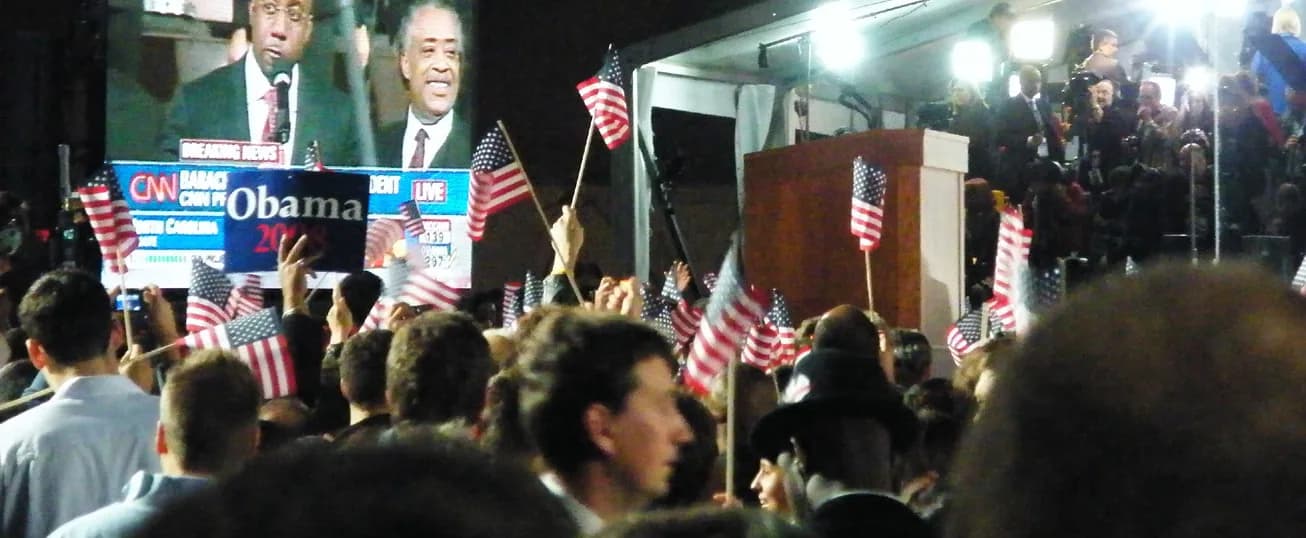
On November 4 Obama won 365 electoral votes to McCain’s 173, with 270 needed to win. He received about 69.5 million popular votes, roughly 52.9 percent of the total, and also carried states that had backed the Republican candidate four years earlier, among them Ohio, Florida, Virginia, Indiana, and North Carolina. McCain conceded in Phoenix and congratulated him. Obama spoke to a very large crowd in Grant Park in Chicago, saying that change had come to America. He was the first African American elected to the presidency, a landmark in a country where Black citizens had been barred from voting for much of its history.
From Victory to the Oath of Office
The weeks after the vote were spent on a transition as the economic crisis deepened. Obama named his cabinet and set out plans for a large economic recovery program. He was sworn in as the 44th president on January 20, 2009, before a vast crowd on the National Mall. Turnout in 2008 was among the highest in decades, and the election drew many first-time and young voters. How its results are judged has long varied with political views, but its record of participation and its historic significance are widely recognized.
A Campaign Built Differently
Obama’s campaign was known for raising large sums from small donors online and for organizing volunteers in many states. He also chose not to accept public financing for the general election, which allowed his campaign to spend more than McCain’s, and he used the internet and social media more heavily than earlier national candidates. Analysts have debated how much of his victory came from these methods and how much from the economic crisis and voters’ weariness with the incumbent party. Most agree that it was a result of several forces at once.
Sources
Found an error? Send a correction. Read our editorial standards.