
Shannon Lucid Returns From Mir
On September 26, 1996, the space shuttle Atlantis landed in Florida with astronaut Shannon Lucid aboard. She had spent about 188 days in space, most of them on the Russian station Mir.
Published · Updated · 3 min read
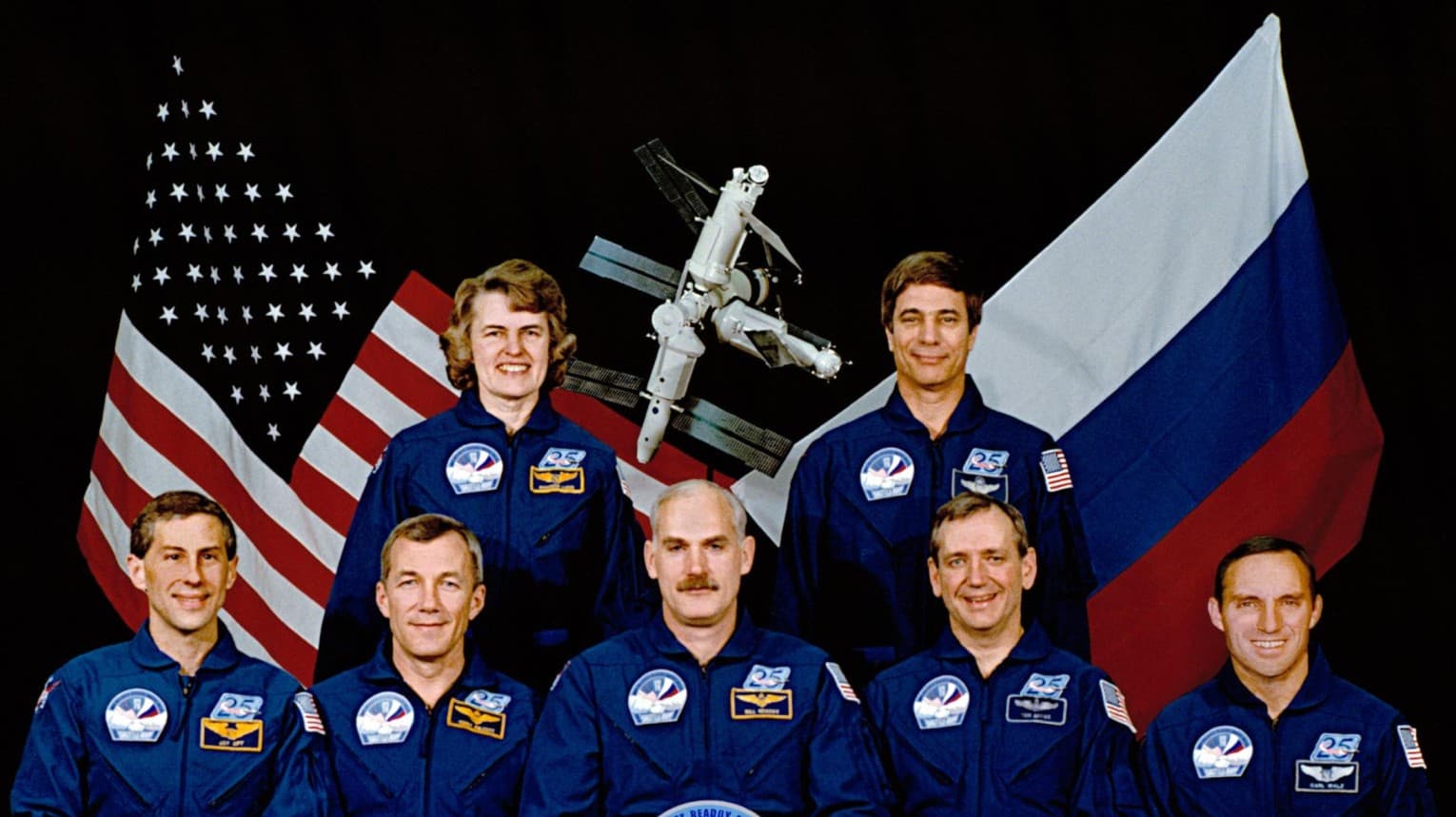
Atlantis Brings Lucid Home
On September 26, 1996, the space shuttle Atlantis landed in Florida with astronaut Shannon Lucid aboard. She had spent about 188 days in space, most of them on the Russian station Mir. At the time, the flight set a U.S. spaceflight duration record and a world record for a woman. It also closed a mission in which a U.S. astronaut had lived for months within a Russian operating system. The landing reunited Lucid with the practical demands of gravity after a stay measured in routines, experiments and maintenance rather than in one continuous spectacle.
Getting There on a Different Shuttle Flight
Lucid had arrived aboard Atlantis on STS-76 in March. The return came on STS-79, which carried John Blaha to Mir to replace her. These were two different flights of the same orbiter, separated by months of life on the station. Shuttle scheduling affected how long Lucid stayed. Delays on the ground extended the mission, demonstrating that an astronaut's time in orbit depends partly on vehicles, crews and managers working thousands of miles away. The station had to support its occupant while the transport system adjusted.
What It Took to Work Together
Mir's systems, labels and working language presented practical challenges for an American astronaut. Cooperation required much more than agreement between national agencies. Crewmates had to understand procedures, share limited space and supplies, communicate about repairs and continue scientific work when plans changed. Lucid took part in experiments during her stay, including work relevant to life sciences and long duration flight. Every successful routine made the collaboration easier to repeat. A shared meal or a clear maintenance instruction could matter as much to daily operations as the terms of the international program.
The First American Handover on Mir
STS-79 made it possible for one American station resident to hand over to another. The overlap allowed Blaha to begin work with knowledge from someone who had actually lived there. Such a transfer can preserve details not obvious in a manual, including where equipment is kept or how station activities are arranged around the rest of the crew. The shuttle brought supplies and carried material back. These exchanges linked station work to launch schedules and laboratories on Earth, an operating pattern that later became familiar on the International Space Station.
What 188 Days Demonstrated
Lucid's endurance was an individual achievement, but the program also tested systems for supporting people on international missions. The record number records how long she was away; it does not tell how the work was distributed or how teams handled delays. Those are the lessons the landing brought into view. Shuttle–Mir provided experience with long stays, handovers and cooperation between crews trained in different traditions. Lucid's September return gave those lessons a concrete endpoint and left Blaha in orbit to carry the work forward.
Sources
Found an error? Send a correction. Read our editorial standards.