
Skylab 3 Returns After Fifty Nine Days in Space
On September 25, 1973, Alan Bean, Owen Garriott and Jack Lousma returned to Earth after about fifty nine days in space. Their Apollo command module splashed down in the Pacific Ocean.
Published · Updated · 3 min read
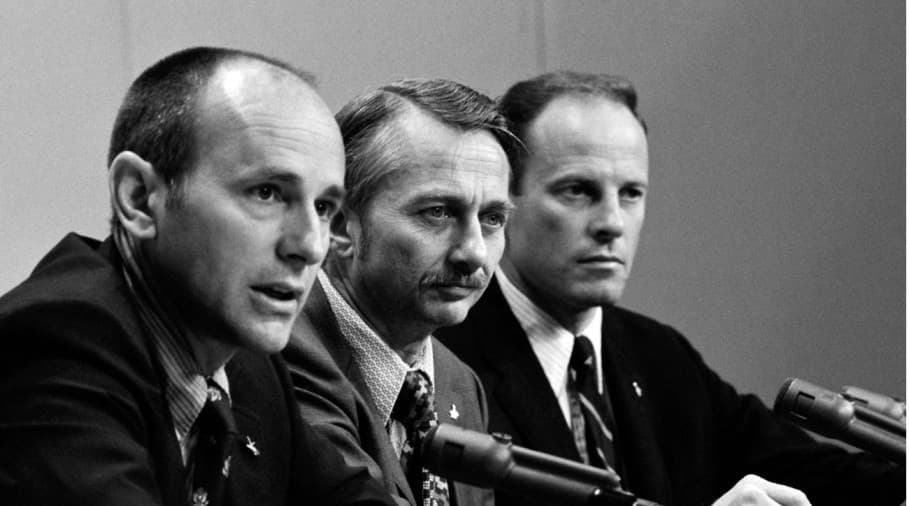
A Splashdown Ends a Long Stay
On September 25, 1973, Alan Bean, Owen Garriott and Jack Lousma returned to Earth after about fifty nine days in space. Their Apollo command module splashed down in the Pacific Ocean. They had served as the second crew to inhabit Skylab, the United States' first space station. The Skylab 3 designation can be confusing because it counts the uncrewed station launch in the sequence. The return marked a new human spaceflight duration record and brought back observations and samples collected through a routine that had been maintained for nearly two months.
A Station With Room for Different Kinds of Work
Skylab gave the astronauts a workshop, equipment for observing the Sun and a place to conduct medical studies over long periods. The crew could track changes that might not become obvious on a short flight. Instruments in the Apollo Telescope Mount recorded solar activity, while other work examined Earth and the astronauts themselves. The different programs competed for the same time. Running a station meant deciding when to observe, exercise, repair equipment, take measurements and rest. That scheduling problem was one of the things a long mission could teach.
Repairs and a Question About the Ride Home
The station had been damaged at launch, and the first crew made emergency repairs. The second crew installed an additional sunshade during a spacewalk. It also faced concerns about thruster problems on the Apollo spacecraft that was to bring it home. NASA prepared for the possibility of a rescue flight, but the available systems were judged sufficient and the rescue was not needed. These episodes show that a space station and its transport are separate systems. Work can continue inside one while engineers evaluate whether the other can perform a safe return.
Collecting Evidence About the Human Body
Astronauts measured aspects of their own performance and health and followed exercise programs to reduce some effects of prolonged weightlessness. Researchers wanted to know what happened to circulation, muscles and the ability to function on return. The crew's landing was therefore part of the experiment. Postflight measurements could be compared with results from before and during the mission. A duration record is easy to report, but the records made at different points in the flight were more useful for planning how people might live and work in orbit for longer.
What Came Back With the Crew
The command module carried people and material that could be studied on the ground. Skylab itself remained in orbit for the next expedition. The separation allowed the scientific program to continue while doctors and researchers examined the results of the just completed mission. September 25 was an ending for Bean, Garriott and Lousma and a handoff for the station's program. The most significant proof of endurance was not simply that the astronauts reached the ocean alive. It was that they returned after weeks of repeatable work, maintenance and observation.
Sources
Found an error? Send a correction. Read our editorial standards.