Roosevelt Dedicates Hoover Dam
On September 30, 1935, President Franklin D. Roosevelt dedicated the great concrete dam under construction on the Colorado River at Black Canyon.
Published · Updated · 3 min read
A Speech at Black Canyon
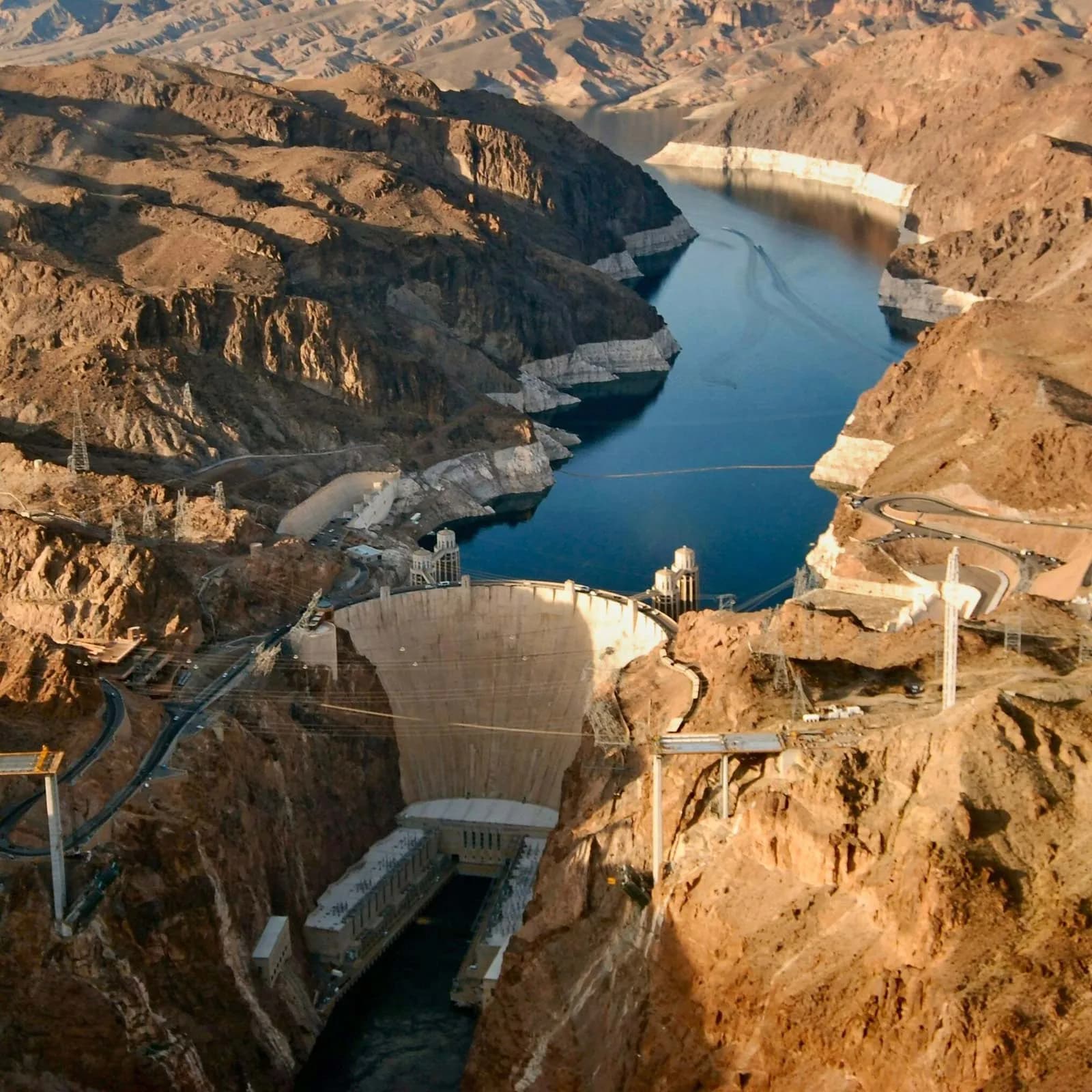
On September 30, 1935, President Franklin D. Roosevelt dedicated the great concrete dam under construction on the Colorado River at Black Canyon. The site sits on the border of Nevada and Arizona. The ceremony marked a visible achievement after years of river diversion, excavation and concrete work, but dedication was not the same as completion of every installation or the beginning of regular power generation. The name Boulder Dam was in official use during Roosevelt's administration; the name Hoover Dam, associated with the project before the ceremony, was restored by Congress in 1947.
Diverting a River Before Blocking It
To build in the riverbed, crews first had to send the Colorado around the site. Diversion tunnels carried water past the work area while temporary barriers helped isolate it. Excavation prepared the canyon walls and floor for the permanent structure. Concrete was placed in a series of blocks, and a system of pipes carried cooling water to remove heat as the concrete set. Those steps were prerequisites for the smooth face the public saw. A dam of this scale could not simply be poured as one solid mass and left to cool on its own.
The People Who Built It
The Depression made construction work especially valuable, and workers came to southern Nevada looking for employment. The job brought heat, dust and serious hazards. Boulder City developed to support the project, but the public ceremony and official photographs reveal only part of the labor behind it. Tunnel workers, drivers, riggers, concrete crews and engineers had to coordinate jobs that could affect one another across the entire canyon. The project became a symbol of public engineering in part because it made it possible to see many such tasks assembled in a single structure.
What the Dam Was Designed to Do
The dam stored water in Lake Mead, controlled downstream flows and provided a site for hydroelectric generation. Those functions linked different users to the same reservoir. Agricultural districts and cities could gain a more regulated supply, while power customers helped give the project a continuing economic role. The river's changed flow and the inundation behind the dam also altered landscapes and habitats. The ceremony celebrated the promise of control, but the operation of the dam created obligations and tradeoffs that could not be resolved once and for all by finishing construction.
What the Dedication Marked
Roosevelt's appearance gave the project a national stage and associated it with the public works politics of the Depression. Much of the planning and authorization had preceded his presidency, and its institutional history stretched beyond one administration. September 30 is best understood as a public milestone in that longer history. At Black Canyon the audience could see enough of the finished shape to understand the scale of the undertaking. The power station, reservoir operations and continuing negotiation over the Colorado would determine what the achievement meant in practice.
Sources
Found an error? Send a correction. Read our editorial standards.