
The Battle of Posada Begins
On November 9, 1330, fighting began in the episode usually called the Battle of Posada. Forces of Basarab I of Wallachia attacked the retreating army of King Charles I of Hungary.
Published · Updated · 3 min read
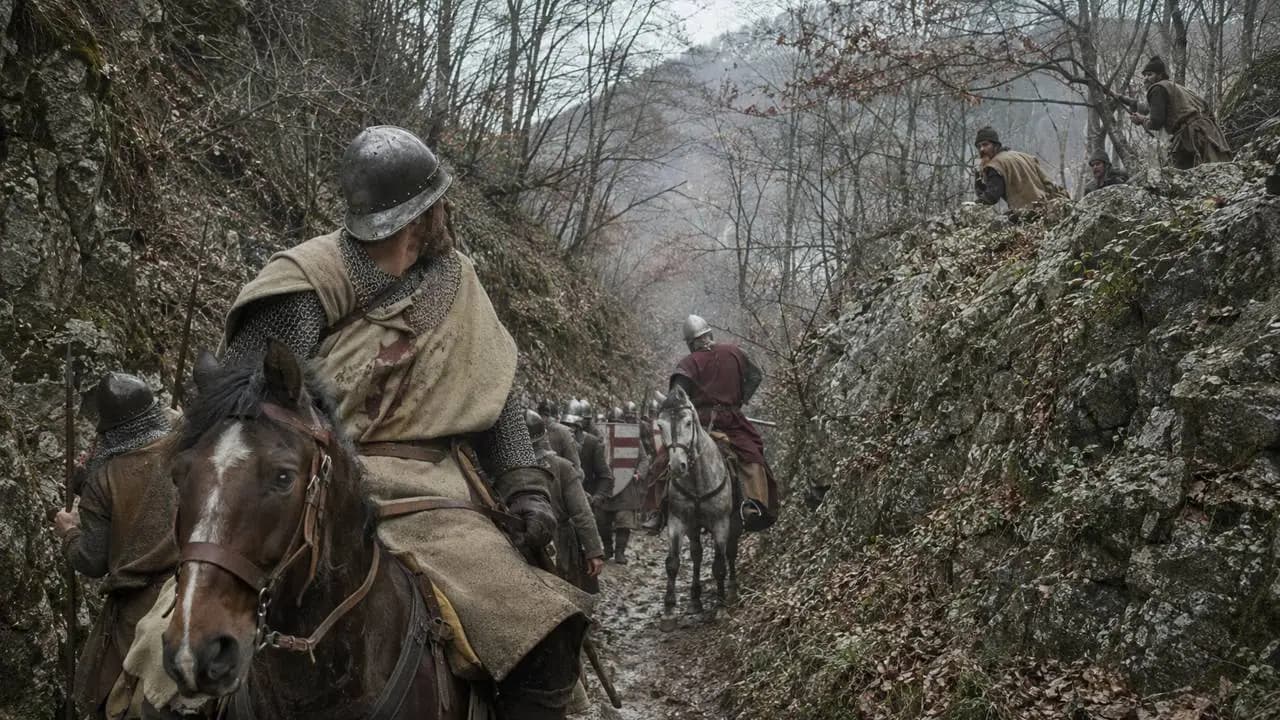
An Army Meets Resistance on Its Return
On November 9, 1330, fighting began in the episode usually called the Battle of Posada. Forces of Basarab I of Wallachia attacked the retreating army of King Charles I of Hungary. The fighting continued over several days, so November 9 marks the opening rather than a complete result achieved that morning. The Hungarian expedition had sought to enforce royal claims and compel obedience. It encountered a situation in which an army could enter a country but still struggle to leave along a route chosen or controlled by its opponents.
Why the Road Was Decisive
Accounts describe an attack in confined mountain terrain. High ground and a narrow passage made it difficult for the larger or more heavily equipped force to deploy its advantages. People moving along a constrained road could not necessarily reach the troops attacking from above. The precise location remains debated, and the name Posada should not imply that every detail of the site is settled. The terrain's role is nevertheless central to the surviving narrative. The defenders could make the route itself an obstacle, rather than wait for a conventional battle in an open field.
What the Chronicle Shows
The illuminated Hungarian chronicle preserves a memorable image of the army being attacked in a pass. It is a historical representation, not a photograph of the event. It communicates danger and disorder through the choices of an artist working after the battle. Text and image can help explain how the defeat was remembered while leaving questions about numbers and exact movements unresolved. Charles survived and returned, but the losses were severe. His escape does not turn the campaign into a success, just as a famous image cannot supply a complete operational account. The multi-day chronology also matters for the idea of surprise. The first attack could create a crisis that continued as people tried to move, regroup or escape. A battle lasting several days is not accurately represented as one volley in a pass followed by an immediate return to normal travel. Its duration was part of the pressure.
The Political Result in Wallachia
Basarab's victory strengthened Wallachia's ability to resist Hungarian control and became important in histories of its political independence. Those claims should be framed within the medieval relations of rulers, tribute and authority, rather than mapped directly onto a modern state system. The campaign demonstrated a practical limit to the king's power in this setting. November 9 identifies when that limit began to be imposed by an attack. The days that followed made the defeat clear, while the longer significance came from what Wallachian rulers could do after their opponent's army had departed.
Sources
Found an error? Send a correction. Read our editorial standards.