
America Buries Its First Unknown Soldier at Arlington
On November 11, 1921, an unidentified American serviceman killed in World War I was buried at Arlington National Cemetery. The date marked three years since the armistice that stopped the fighting on the Western Front.
Published · Updated · 3 min read
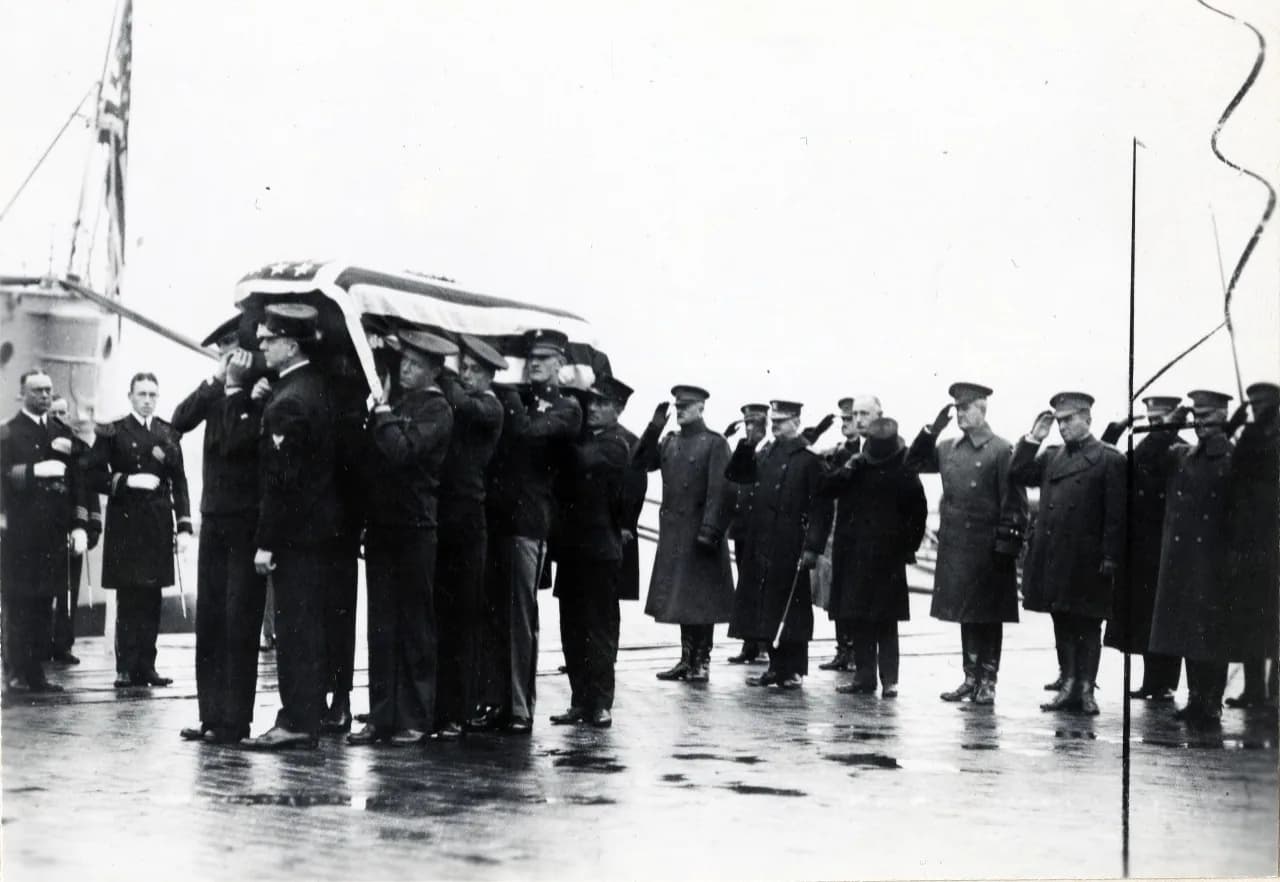
A Burial on Armistice Day
On November 11, 1921, an unidentified American serviceman killed in World War I was buried at Arlington National Cemetery. The date marked three years since the armistice that stopped the fighting on the Western Front. President Warren G. Harding took part in the ceremony. The burial gave a national place to grief that had often been experienced without a known grave. The identity of the man was deliberately left unknown, allowing his grave to stand for many military dead whose families had never received a conclusive identification.
Selecting an Unknown in France
American personnel exhumed four unidentified sets of remains from different military cemeteries in France and brought them to Châlons-sur-Marne for selection. Sergeant Edward F. Younger chose one of four caskets by placing white roses on it. The procedure protected the anonymity that gave the ceremony its purpose. It also meant that the chosen serviceman was one of the actual dead, rather than an empty symbolic coffin. The other remains were reinterred in France. The ceremony in Arlington thus began with decisions made on the landscape where the losses had occurred.
From the French Coast to Washington
The selected casket was carried to the United States aboard USS Olympia. Its passage connected the battlefields and burial grounds of Europe with institutions of national remembrance in Washington. The casket lay in state at the U.S. Capitol before the procession to Arlington. Each location served a different audience: the ship brought the remains home, the Capitol gave the public a place to pay respects, and the cemetery provided the grave. The journey made it possible for the burial to be a public event while keeping the soldier's individual identity outside the ceremony.
The Tomb Visitors Recognize Came Later
The 1921 interment preceded the large white marble monument now associated with the Tomb of the Unknown Soldier. That superstructure was completed in 1932. Later ceremonies added remains representing other wars, and identification through DNA led to the removal of the Vietnam unknown in 1998. These changes do not erase the original act. They show that the Tomb's form and the practical meaning of an unknown burial evolved as memorial customs and methods of identification changed. A depiction of 1921 should distinguish the original grave from the later monument.
Why No Name Was the Point
War memorials often preserve lists of names. This burial created meaning by leaving one name unavailable. A visitor could see an actual grave while recognizing that no family could claim it as its own. The choice gave a public institution a way to acknowledge both collective service and a very specific kind of private uncertainty. November 11, 1921, is remembered because it made room for that uncertainty at the center of a national ceremony, with the dead serviceman's anonymity protected by design.
Sources
Found an error? Send a correction. Read our editorial standards.