Alvin York in the Argonne: The Action Behind the Medal of Honor
On October 8, 1918, Corporal Alvin York assumed command after his patrol suffered heavy casualties near Chatel-Chéhéry, France. He and the surviving soldiers brought back 132 German prisoners.
Published · Updated · 3 min read
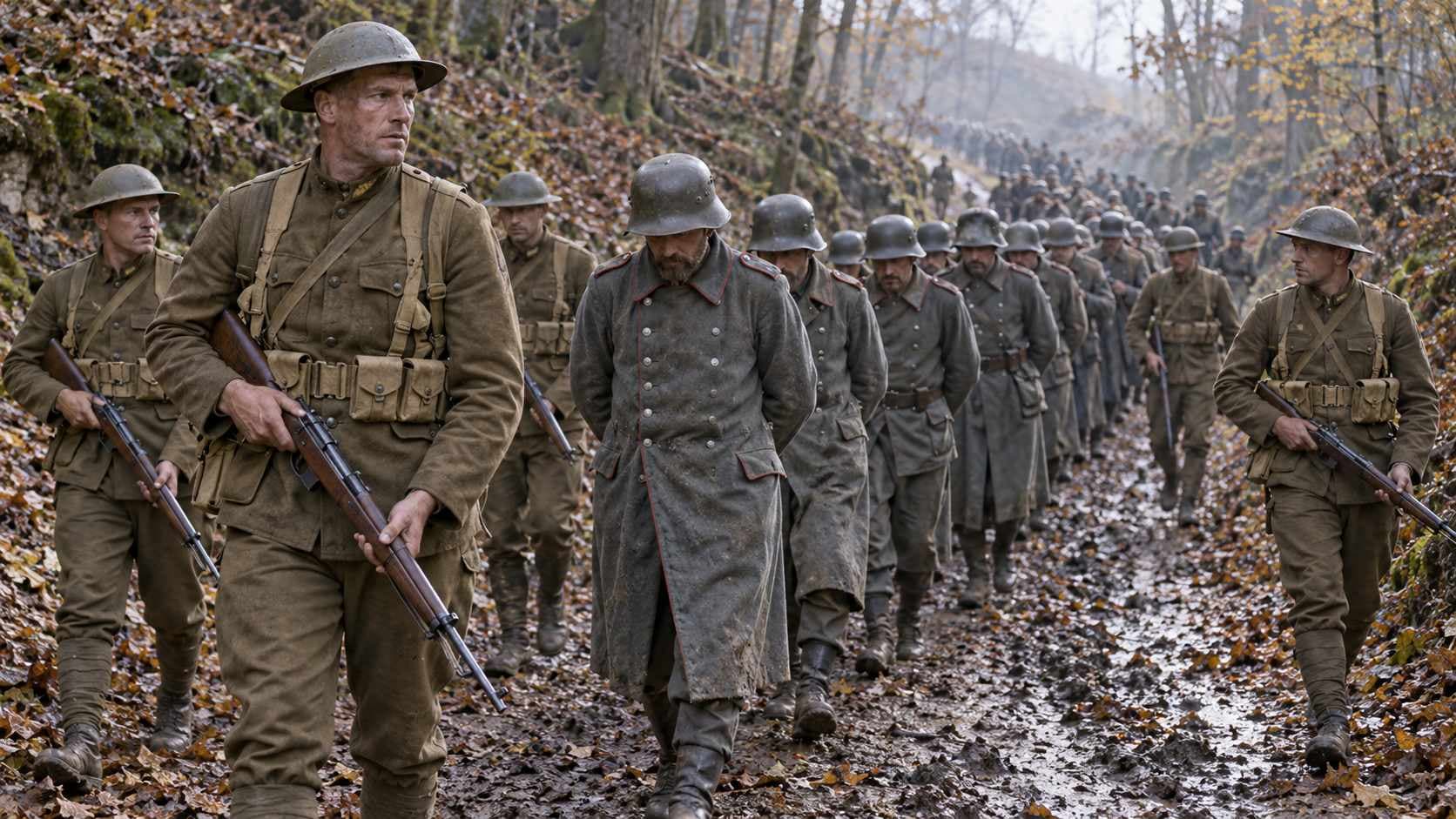
An American patrol in France
On October 8, 1918, Alvin C. York served as a corporal in Company G, 328th Infantry, 82nd Division. His unit was fighting near Chatel-Chéhéry in France during the Meuse-Argonne Offensive. German machine-gun positions were holding up the American advance, and York joined a patrol sent behind the enemy lines to help overcome them.
A capture followed by renewed danger
The patrol surprised a German headquarters and took prisoners. That initial success did not end the operation. German machine guns and rifles subsequently opened fire on the Americans, inflicting heavy casualties. The soldiers now had to deal with enemy fire while already holding prisoners behind the opposing lines.
York assumed command
York’s Medal of Honor citation states that three other noncommissioned officers had become casualties. He assumed command and led seven men against the machine-gun position. This detail is important: the action involved a patrol and its surviving soldiers, even though popular accounts often reduce the entire episode to one man acting alone.
What the official citation records
The citation credits the action with capturing a machine-gun nest, several guns, four officers and 128 men. The officers and men together account for the familiar total of 132 prisoners. Stating the figures this way preserves the wording’s meaning rather than accidentally adding four officers to an already complete total.
Returning with the prisoners
The Army’s broader history describes York and the remaining members of the patrol escorting 132 prisoners back to American lines. Capturing a position and returning safely were separate parts of the achievement. The surviving soldiers still had to move a much larger group of prisoners out of the enemy-held area.
A celebrated action within a larger offensive
The episode formed part of an offensive intended to break German defenses in the Meuse-Argonne region. York’s action helped address a local obstacle to his unit’s advance; it did not independently decide the entire campaign. Placing the patrol within that operation gives the achievement its military setting without exaggerating its scope.
Why accounts should be compared carefully
Army publications differ in the numbers of German soldiers they describe as killed during the encounter. Rather than selecting one disputed figure, this account emphasizes the details clearly recorded in York’s award citation: his assumption of command, the seven men he led and the capture of 132 prisoners. A source can establish some parts of an event more firmly than others.
Corporal that day, Sergeant York in memory
York is commonly remembered as Sergeant York, but his Medal of Honor citation identifies him as a corporal at the time of the October 8 action. Keeping his rank on that date distinct from the title used in later remembrance avoids a small but recurring historical error. He subsequently received the Medal of Honor for the action.
Sources
Found an error? Send a correction. Read our editorial standards.