Valcour Island: A Defeat That Bought America Time
On October 11, 1776, Benedict Arnold’s fleet fought British vessels on Lake Champlain. The Americans suffered heavy losses, but their resistance helped delay the British advance as winter approached.
Published · Updated · 2 min read
A Lake on the Invasion Route
In October 1776, Lake Champlain was a strategic corridor between British-controlled Canada and American positions to the south. Control of its waters would allow British forces to support an advance toward those positions. The Americans assembled a small fleet under Brigadier General Benedict Arnold to contest that route.
A Fleet Built in Haste
Arnold’s force included small gunboats and other vessels constructed or prepared for service on the lake. These were not large ocean-going warships. Their crews faced a stronger British naval force, making the choice of a defensive position especially important.
Taking Position at Valcour Island
The Americans positioned their fleet in the narrow waters between Valcour Island and the western shore of Lake Champlain. Arnold hoped the confined setting would limit the British ability to bring their full strength into action. Geography became part of the American defense.
The Battle on October 11
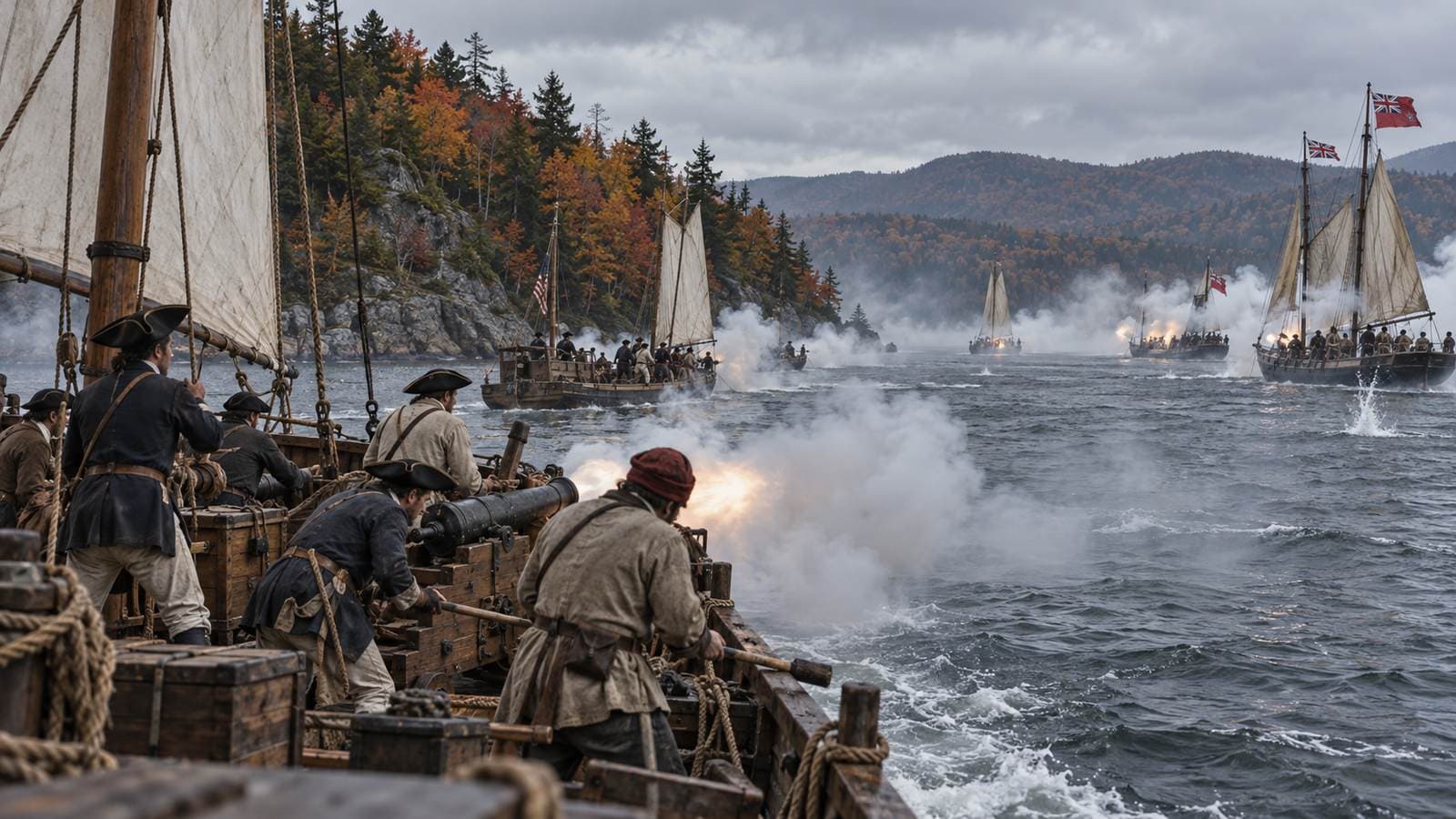
On October 11, 1776, British and American vessels exchanged cannon fire near the island. British guns inflicted severe damage on the American fleet. The fighting left vessels battered and crews facing the prospect of destruction or capture if they remained in position.
An Escape Under Cover of Darkness
During the night, the surviving American vessels slipped past the British and withdrew southward. That escape did not end the danger. British pursuit continued over the following days, and additional American ships were lost or abandoned.
A Tactical Defeat With a Wider Effect
The Americans lost the naval contest, but the campaign on Lake Champlain consumed time and complicated the British advance. With winter approaching, British forces did not complete their intended push south that year. Valcour Island therefore illustrates how a defeated force can still influence the pace and outcome of a larger campaign.
Evidence Beneath the Water
The gunboat Philadelphia sank during the October 11 fighting. It was recovered from Lake Champlain in 1935, with its hull and numerous objects preserved by the lake environment. Other wrecks, including Spitfire, have also contributed to archaeological study of the campaign.
Recreating the Battle Carefully
An illustrative recreation should show small eighteenth-century lake vessels, black-powder cannon smoke and a nighttime withdrawal. It should not replace the fleet with enormous ships of the line or portray the American retreat as a decisive battlefield victory. The battle, escape and subsequent pursuit were separate stages.
Sources
Found an error? Send a correction. Read our editorial standards.