The First Flight Around the World Comes Home
On September 28, 1924, two U.S. Army aircraft landed in Seattle, completing the first aerial circumnavigation of the world after a journey lasting nearly six months.
Published · Updated · 2 min read
An ambitious departure
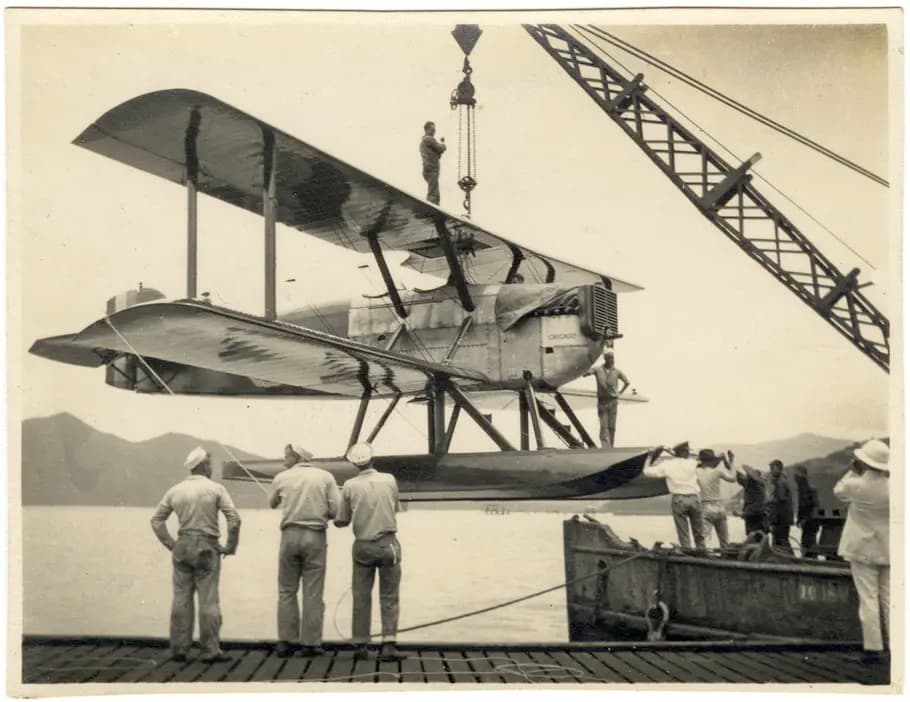
In April 1924, four U.S. Army aircraft set out from Seattle on an attempt to fly around the world. Such a journey required many stops for fuel, repairs, and changing conditions along the route.
A difficult journey
The expedition crossed oceans and continents over nearly six months. Two of the original four aircraft completed the full route, supported by extensive planning and assistance along the way.
Back in Seattle
On September 28, 1924, the two remaining aircraft returned to Seattle. Their arrival completed the first flight around the world.
Why September 28 matters
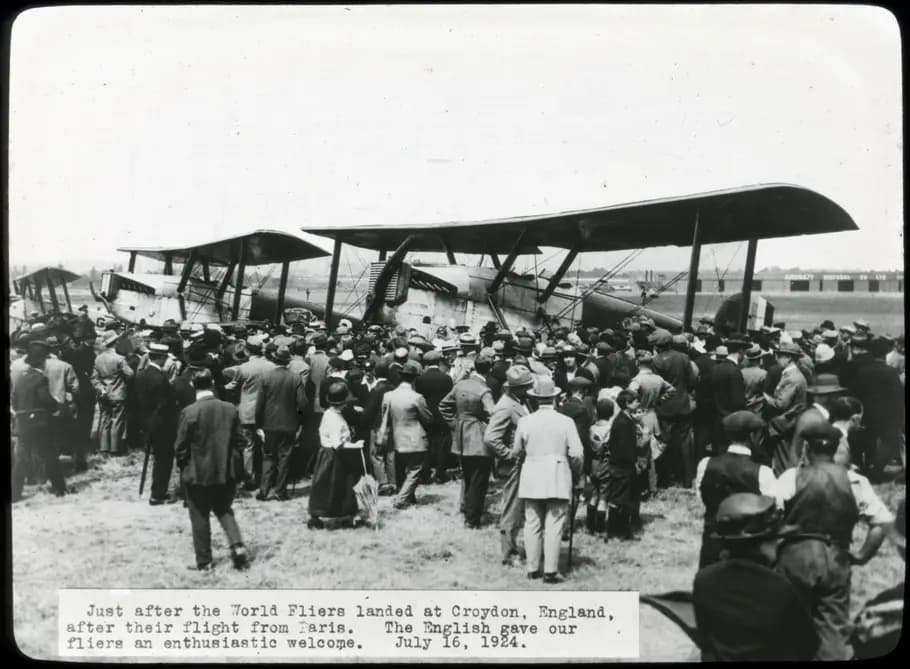
The return showed what long-distance aviation could accomplish in an era when flying across the world was still uncertain and dangerous. The achievement depended on the crews and a large network of people who helped them complete the journey.
The aircraft that completed the circuit
The Chicago and New Orleans were the two original Douglas World Cruisers that completed the route. The Seattle and Boston had to leave the expedition after accidents. Naming the aircraft helps clarify that this was a coordinated military expedition using several machines, not one pilot’s nonstop journey.
Flying days were not elapsed days
The National Archives records 175 elapsed days from the April 6 departure to the September 28 return, including repairs and waits for weather. Its figure of 66 flying days refers to days on which flights took place. Confusing those figures can make the trip appear far faster than it was.
The infrastructure behind the achievement
The route depended on permissions to cross other countries, mechanics, spare engines and naval support. The historical breakthrough was therefore as much an achievement in planning and cooperation as in piloting. The journey demonstrated a possible route around the world, not the existence of a regular global passenger service.
Sources
- Smithsonian National Air and Space Museum — The Story of the First Flight Around the World — Smithsonian National Air and Space Museum
- U.S. National Archives — 1924 round-the-world fliers complete their mission — U.S. National Archives
- U.S. National Archives — Celebrating the Centennial of the First Around the World Flight — U.S. National Archives
- Magellans of the Sky: the 1924 expedition — National Archives
Found an error? Send a correction. Read our editorial standards.