Mars Observer: The Mission That Went Silent Before Mars
On September 25, 1992, NASA launched Mars Observer to study the Red Planet. Nearly 11 months later, contact was lost just before the spacecraft could enter Mars orbit.
Published · Updated · 2 min read
On September 25, 1992, NASA launched Mars Observer from Cape Canaveral, Florida. Designed to orbit Mars, the spacecraft carried instruments to photograph the planet and study its environment. It was the first U.S. mission to Mars in 17 years.
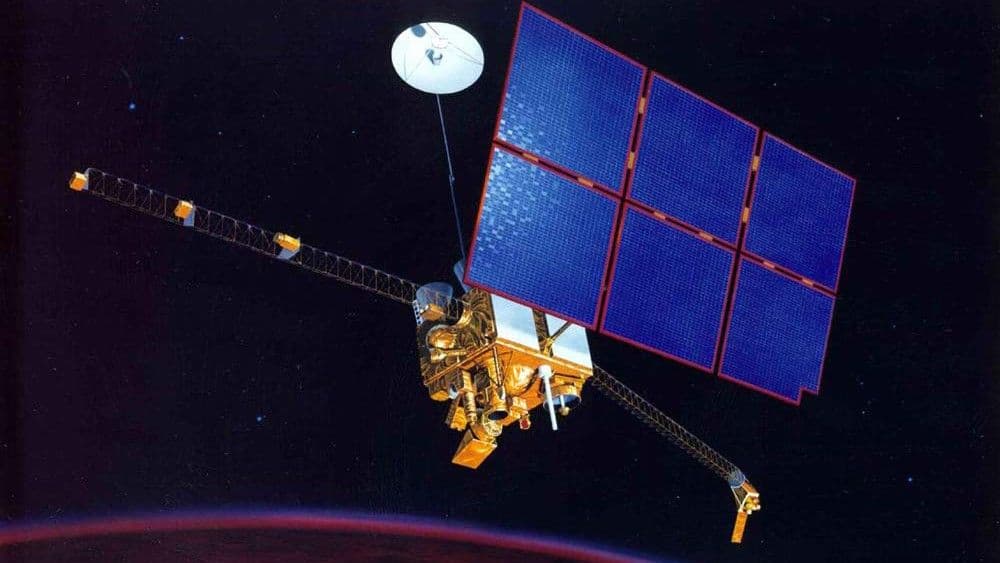
A new look at the Red Planet
Mars Observer was built to study Mars from orbit. Its instruments included a camera, a laser altimeter, and equipment for examining the planet’s temperature and magnetic environment.
The signal that never returned
On August 21, 1993, as the spacecraft approached Mars, its transmitter was switched off as a precaution during preparations for orbit insertion. Controllers expected the signal to return, but it never did. Mars Observer was lost before it could begin its planned survey.
What happened?
Investigators examined several possible causes, including failures in the propulsion, electrical, computer, and transmitter systems. Because the spacecraft was not transmitting when the failure occurred, they could not determine a definitive cause.
Why September 25 matters
September 25 marks the launch of an ambitious mission. Its loss nearly a year later, just before arrival at Mars, is an important part of the same story.
A mission lost before its survey
A launch date is an opening milestone, not a guarantee that a spacecraft will reach its scientific orbit. Mars Observer’s instruments were intended to build a broad survey of the planet. The loss during approach meant that a functioning spacecraft during cruise could still fail before its central objective began.
Why investigators could not be certain
JPL’s investigation considered several possible failure paths and favored a propulsion-system explanation, but the absence of telemetry at the crucial time prevented a definitive finding. An account should distinguish a leading hypothesis from a confirmed diagnosis. Silence revealed that contact was lost; it did not directly reveal which component failed.
Sources
Found an error? Send a correction. Read our editorial standards.