Alvin York's Patrol in the Argonne
On October 8, 1918, a patrol of the U.S. 82nd Division went forward during the Meuse–Argonne offensive. Its men were trying to get behind German positions that were impeding the American advance.
Published · Updated · 3 min read
An Attack Meets Machine Guns
On October 8, 1918, a patrol of the U.S. 82nd Division went forward during the Meuse–Argonne offensive. Its men were trying to get behind German positions that were impeding the American advance. They took prisoners early in the operation but then came under machine gun fire. Several Americans were killed or wounded, including men senior to Corporal Alvin York. The familiar story often begins with York's shooting. It is clearer to begin with the patrol's predicament: it had prisoners to control, injured men on the ground and an enemy position that had not stopped firing.
How York Had Come to the Front
York came from Tennessee and wrestled with the demands of military service because of his religious convictions. He sought exemption on grounds of conscience but ultimately served in the Army. The tension between that decision and his later reputation as an exceptional combat soldier became an important part of the way Americans told his story. His background as a skilled marksman is relevant to the fight, but it does not supply a complete explanation of what happened. The patrol was operating inside an offensive with objectives and orders far larger than one man's biography.
From a Small Party to a Large Surrender
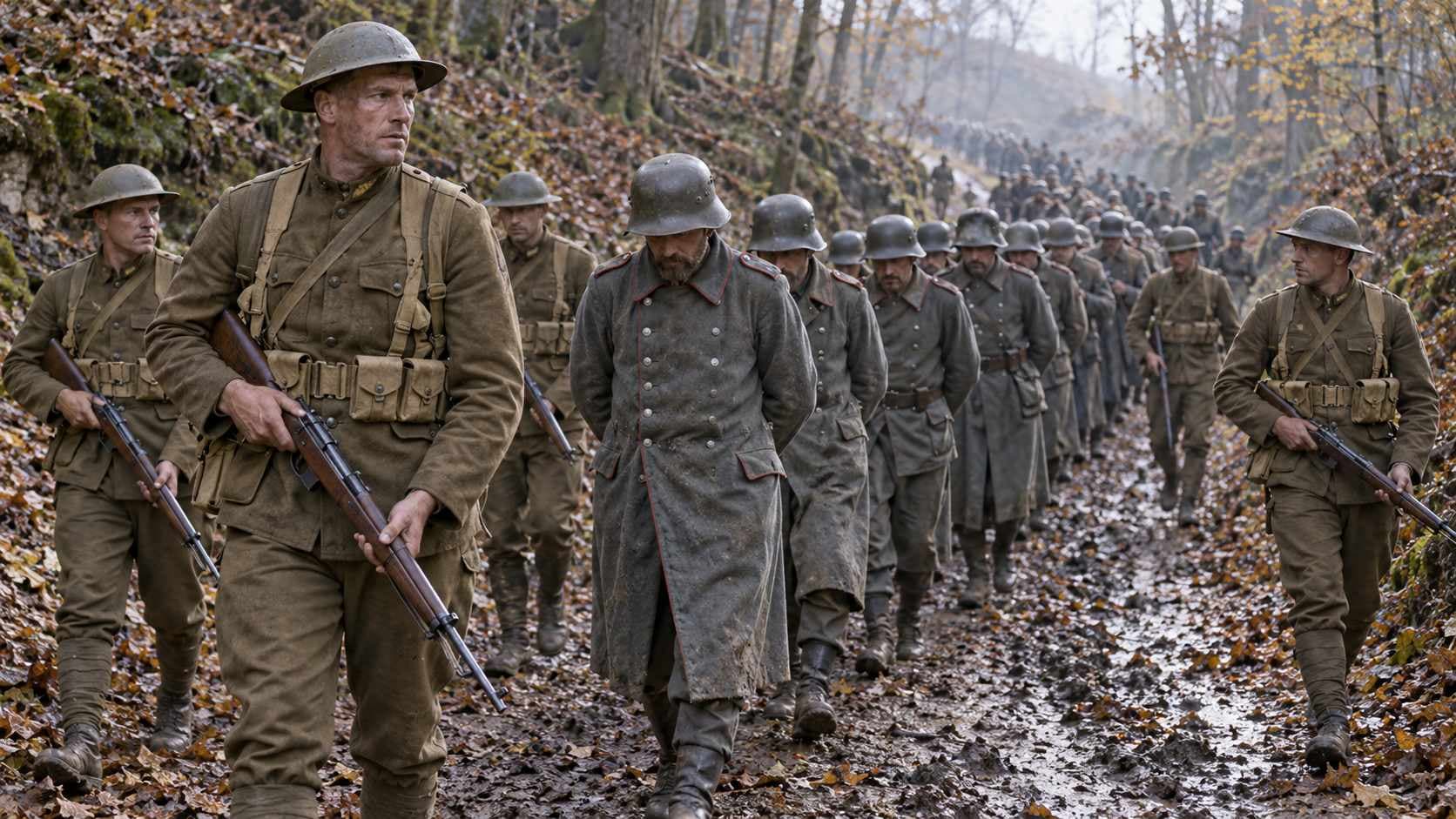
York returned fire and helped force a surrender. The surviving Americans brought back 132 German prisoners, a result recorded in the Army's account and in the story of York's Medal of Honor. A prisoner total is easier to preserve than a definitive reconstruction of every shot. The surviving soldiers had to watch captives and move them back toward American lines. Describing the action as a lone man marching out to capture an entire force obscures the patrol's initial success, its losses and the work of the other men who remained able to act.
The Battle Around the Patrol
Meuse–Argonne operations depended on clearing strongpoints, maintaining contact between units and moving men and supplies through broken terrain. A machine gun position could check a much larger movement if it covered an exposed approach. A patrol that reached the rear of such a position might therefore produce results beyond its size. York's action was unusually successful in local terms. The offensive continued afterward, and other units encountered different obstacles. Keeping that larger battle in view makes it possible to explain why taking prisoners on one slope mattered without claiming that the action alone decided the campaign.
What the Medal Commemorates
York received the Medal of Honor, and later newspaper coverage and a feature film made his name widely known. The public image highlighted courage, marksmanship and a man struggling with the morality of war. The original event also involved confusion, casualties and cooperation among survivors. Those features make the story less tidy than the popular version and more useful as military history. On October 8, responsibility shifted to a corporal because the patrol had been badly hit, and his decisions helped turn a dangerous local failure into a documented surrender.
Sources
Found an error? Send a correction. Read our editorial standards.