The Battle of the Thames and the Death of Tecumseh
On October 5, 1813, an American army caught up with retreating British and Indigenous forces near Moraviantown on the Thames River in Upper Canada, now Ontario. The battle followed a change in control of Lake Erie.
Published · Updated · 3 min read
A Retreat Through Upper Canada
On October 5, 1813, an American army caught up with retreating British and Indigenous forces near Moraviantown on the Thames River in Upper Canada, now Ontario. The battle followed a change in control of Lake Erie. Oliver Hazard Perry's American naval victory in September had endangered British communications and supplies in the western theater. British commander Henry Procter withdrew from the Detroit frontier, and William Henry Harrison pursued. For Tecumseh and his allies, falling back meant more than abandoning an exposed military position: it brought the conflict farther from communities and territory they had fought to protect.
Why Tecumseh Was There
Tecumseh was a Shawnee leader who sought a broad Indigenous coalition against American territorial expansion. His cooperation with Britain during the War of 1812 rested on a convergence of interests. The alliance gave his movement a military partner, while Britain depended on Indigenous fighters for strength and mobility on the frontier. Those interests were not identical. British officers could choose to fall back along an imperial supply route; their allies had to consider what an American victory would mean for the land, authority and security of their own nations.
The Line at Moraviantown
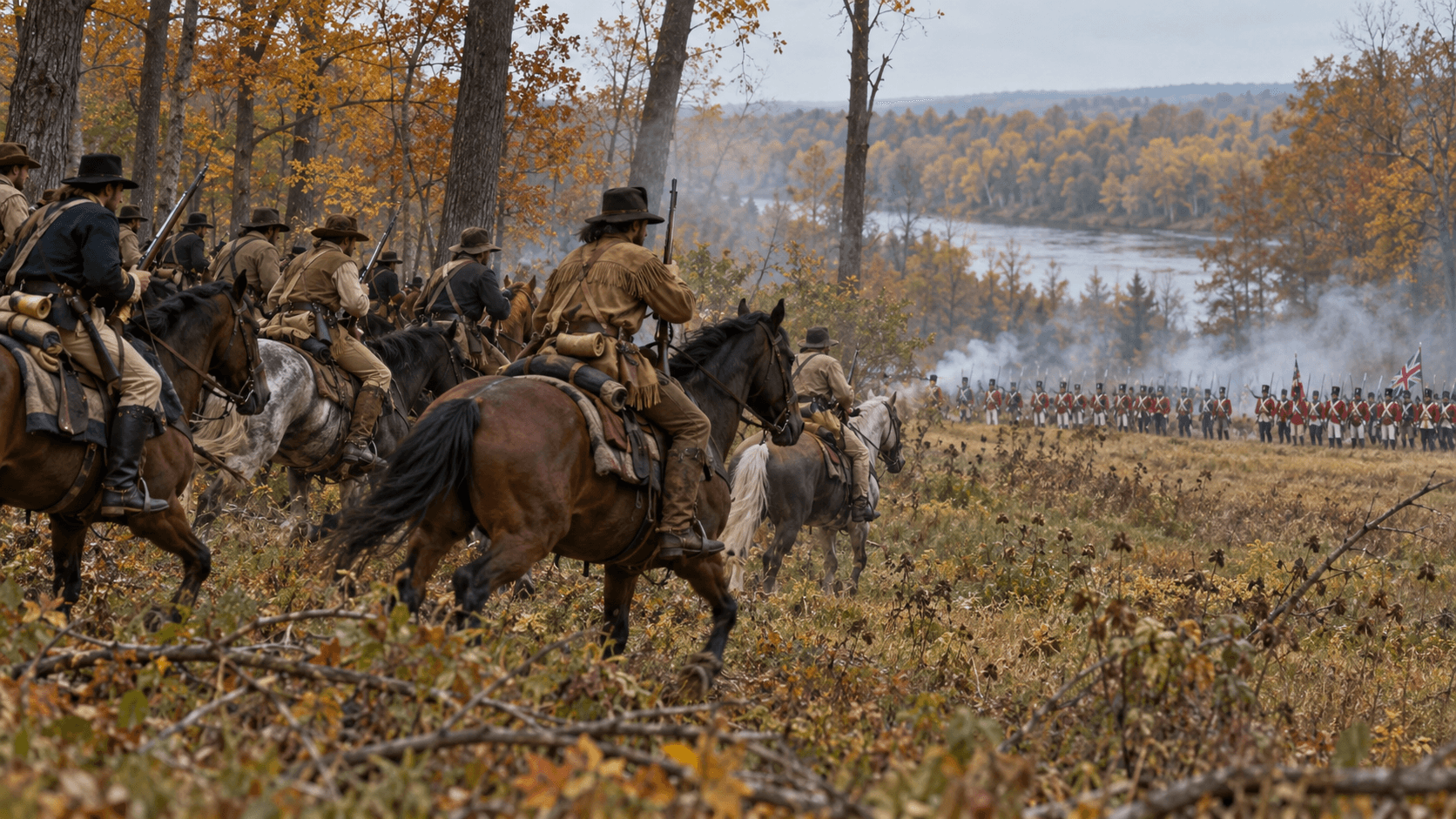
The retreating force made a stand where the river, road and swamp shaped the battlefield. Harrison's troops included mounted Kentuckians who could move rapidly into the British position. The British regulars gave way quickly under the attack, with many captured. The Indigenous fighters resisted in the wooded and swampy part of the field. Tecumseh died during this fighting. Later accounts gave different versions of who killed him, and political fame attached itself to some of those claims. The historical significance of his death does not depend on assigning a decisive shot to a named American.
The Collapse of a Position
Procter escaped, but the loss of men and equipment reduced Britain's ability to reestablish its former position in the region. Harrison's victory consolidated American gains around Detroit. Tecumseh's death was a severe blow to the coalition he had worked to assemble. That outcome should not be confused with an end to Indigenous resistance or with the disappearance of separate Indigenous political communities. It changed the balance in one war and removed a leader whose efforts had linked several struggles across a wide area.
Why the Two Names Matter
Battle of the Thames identifies the river, while Battle of Moraviantown names the community near the fighting. The different names invite a closer look at whose geography organizes the story. An American campaign account emphasizes the pursuit after Lake Erie. A Canadian account may emphasize the defense of Upper Canada. A history attentive to Tecumseh begins earlier, with efforts to prevent the alienation of Indigenous land. The October battle belongs to all three accounts, and each explains a different reason people were on the field.
Sources
Found an error? Send a correction. Read our editorial standards.