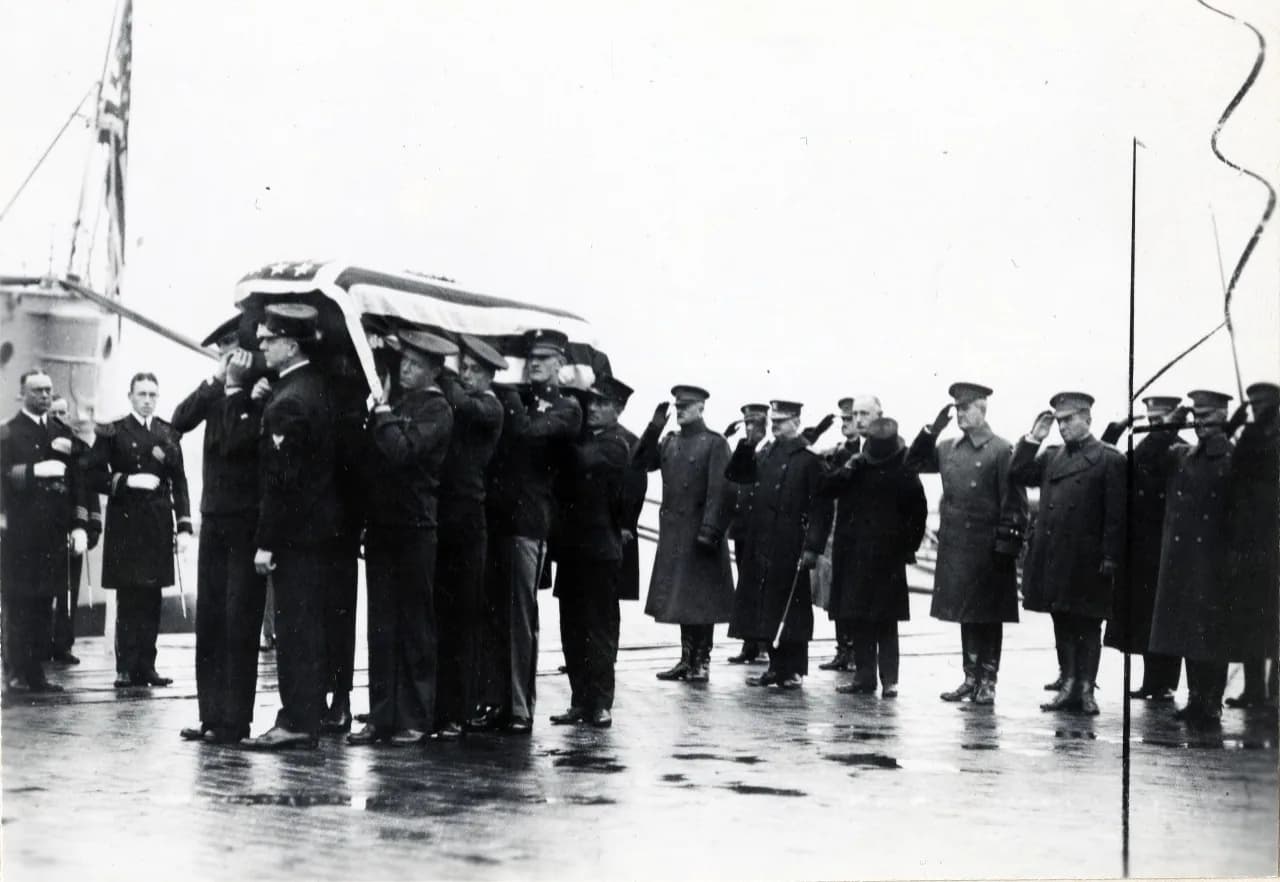
Japan Attacks Pearl Harbor
Japanese forces attacked Pearl Harbor in Hawaii on December 7, 1941.
Published · Updated · 3 min read
The Attack Begins on Oahu
On December 7, 1941, Japanese carrier aircraft attacked Pearl Harbor and other military installations on Oahu, Hawaii. The operation struck in two main waves. Warships at anchor and aircraft on the ground were vulnerable because much of the force was concentrated and the attack achieved surprise. More than 2,400 Americans died, including service members and civilians. The harbor became the best-known site, but airfields and other locations were also attacked. Seeing the operation only as a strike on battleships obscures the attempt to reduce American air power and the experiences of people on different parts of the island.
What Japanese Planners Wanted
Japan was already at war in China and sought to expand into Southeast Asia. American economic pressure and the failure of negotiations formed part of the setting in which Japanese leaders chose war. They hoped to disable the U.S. Pacific Fleet long enough to pursue other objectives in the region. Aircraft carriers approached Hawaii across the North Pacific and launched aircraft to attack from a distance. Success depended on surprise and concentration. Neither depended on permanently occupying Pearl Harbor. The plan tried to create an interval in which the United States would be less able to interfere elsewhere.
Destruction and Limits
USS Arizona suffered catastrophic damage, and other battleships were sunk or damaged. Some ships were later raised and returned to service. American carriers were not in the harbor during the attack, and important facilities survived. Those facts distinguish the immediate shock from the longer naval result. Sailors, medical staff, firefighters and civilians dealt with injuries, burning ships and confused reports while the attacks were still unfolding. The people making those decisions did not yet know which ships would eventually be repaired. A careful account can recognize the severity of the losses without accepting the assumption that the fleet's future was decided in one morning.
A Decision in Washington the Next Day
President Franklin D. Roosevelt addressed Congress on December 8, and Congress declared war on Japan. Germany and Italy declared war on the United States on December 11, bringing a further change in the scope of American participation. These were political acts with dates distinct from the raid itself. In Japan and in parts of Asia it was already December 8 when the attack occurred because of the time difference. The December 7 anniversary uses the local date in Hawaii. Its importance lies in both the attack's human consequences and the decisions that turned a surprise military operation into a lasting change in the war.
Sources
Found an error? Send a correction. Read our editorial standards.