Kings Mountain: The Militia Battle That Changed the Southern Campaign
On October 7, 1780, Patriot militia surrounded Patrick Ferguson’s Loyalist force at Kings Mountain. The short battle ended with Ferguson dead and his force defeated.
Published · Updated · 2 min read
A British officer commanding Loyalist militia
The Battle of Kings Mountain was fought on October 7, 1780, in what is now South Carolina. Major Patrick Ferguson commanded the Loyalist force. A Scottish-born British officer, Ferguson had been assigned to organize and train Loyalist militia during Britain’s southern campaign. His opponents were Patriot militia pursuing him across the region.
Why this was also a war between Americans
The National Park Service identifies Ferguson as the only British soldier involved in the battle. The men fighting under him were Loyalists, while the attacking militia supported independence. Kings Mountain therefore exposes the civil conflict within the Revolution: colonial inhabitants took opposing sides, and allegiance could divide communities as well as armies.
The pursuit before the fighting
The Patriot force was assembled from several groups rather than arriving as one permanent army. Its pursuit involved mountain crossings, changing information about Ferguson’s whereabouts and a reversal of direction when his movement became clearer. At Cowpens on the evening of October 6, the Patriots selected approximately 900 well-mounted and armed men to continue the chase through rain.
Surrounding the position
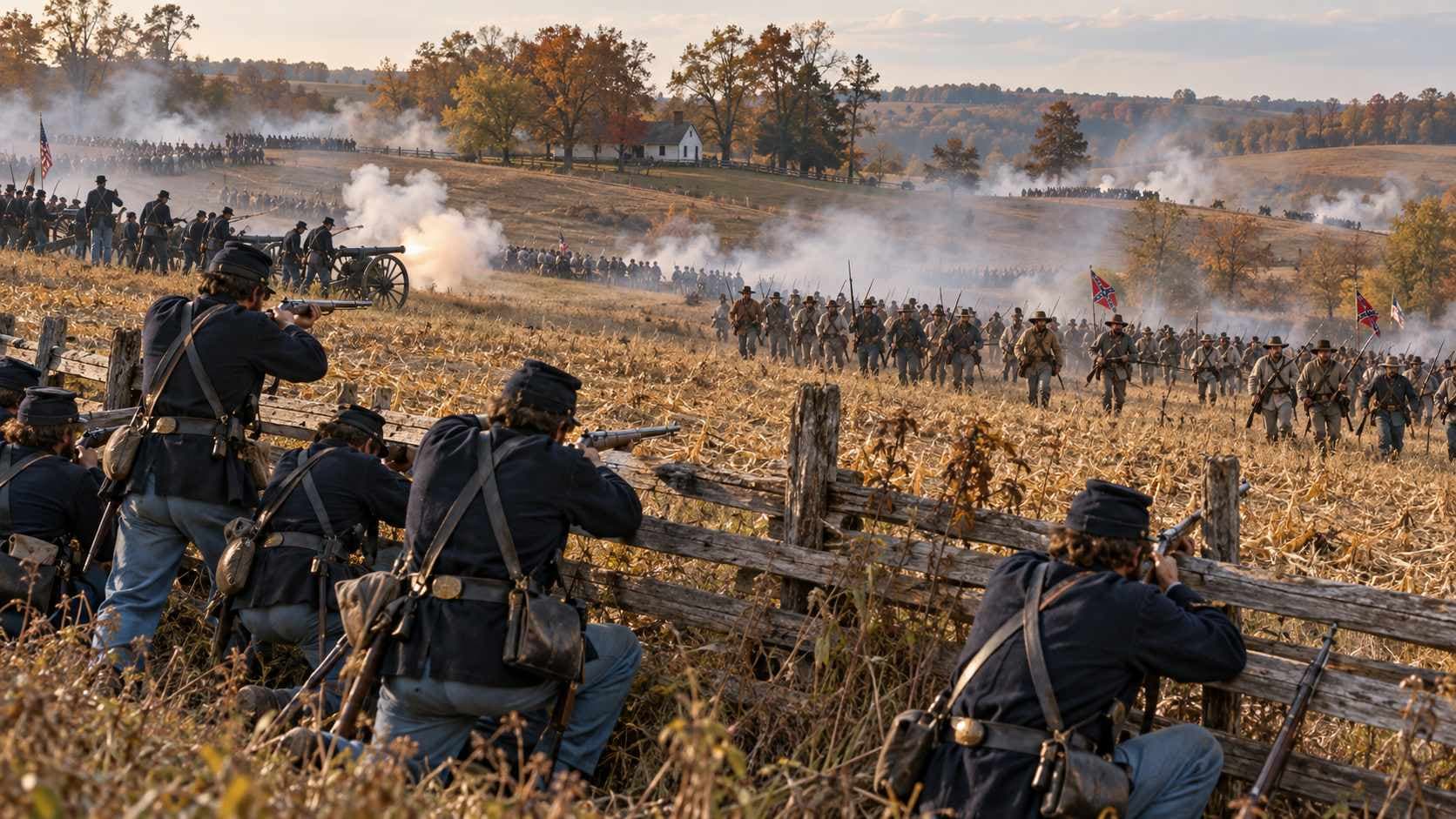
After crossing the Broad River on October 7, the pursuers learned more about Ferguson’s location. They reached Kings Mountain and positioned their men around the hill before advancing toward the Loyalist camp. The fighting lasted a little over an hour. Ferguson was killed, and his force was defeated.
A reversal in the southern war
The victory removed Ferguson and the force he had organized from the campaign. It also demonstrated that Patriot militia could combine, pursue an opponent and deliver a decisive result. Kings Mountain did not end the Revolution, but it helped shift momentum in a region where Britain was attempting to strengthen its position.
The aftermath was not a simple celebration
The return journey included punishment of captured Loyalists. The National Park Service’s trail chronology records that 30 were tried at Biggerstaff’s Old Fields on October 14 and nine were hanged. Including that aftermath gives a fuller account than a victory scene alone: the campaign involved prisoners, reprisals and the hostility of a war fought between people from the same broader colonial society.
Sources
Found an error? Send a correction. Read our editorial standards.