The Second Battle of Saratoga: How a British Advance Became a Retreat
On October 7, 1777, American troops broke up a British reconnaissance near Saratoga and captured a crucial fortified position. Ten days later, Burgoyne surrendered his army.
Published · Updated · 2 min read
An army blocked on its way south
On October 7, 1777, General John Burgoyne’s army faced a problem that a successful march alone could not solve. Advancing south from Canada, it had reached American defenses near the Hudson River in New York. The route toward Albany remained blocked, supplies were becoming harder to obtain, and the opposing army was still capable of fighting.
Why the September battle had not settled the campaign
The armies had already fought at Freeman’s Farm on September 19. British forces held the field afterward, but they suffered heavy losses and did not remove the American obstacle to further movement. Possession of a battlefield therefore did not mean that Burgoyne had achieved his campaign’s purpose. His army remained close to the same defenses, with fewer resources available.
A reconnaissance force entered the wheatfield
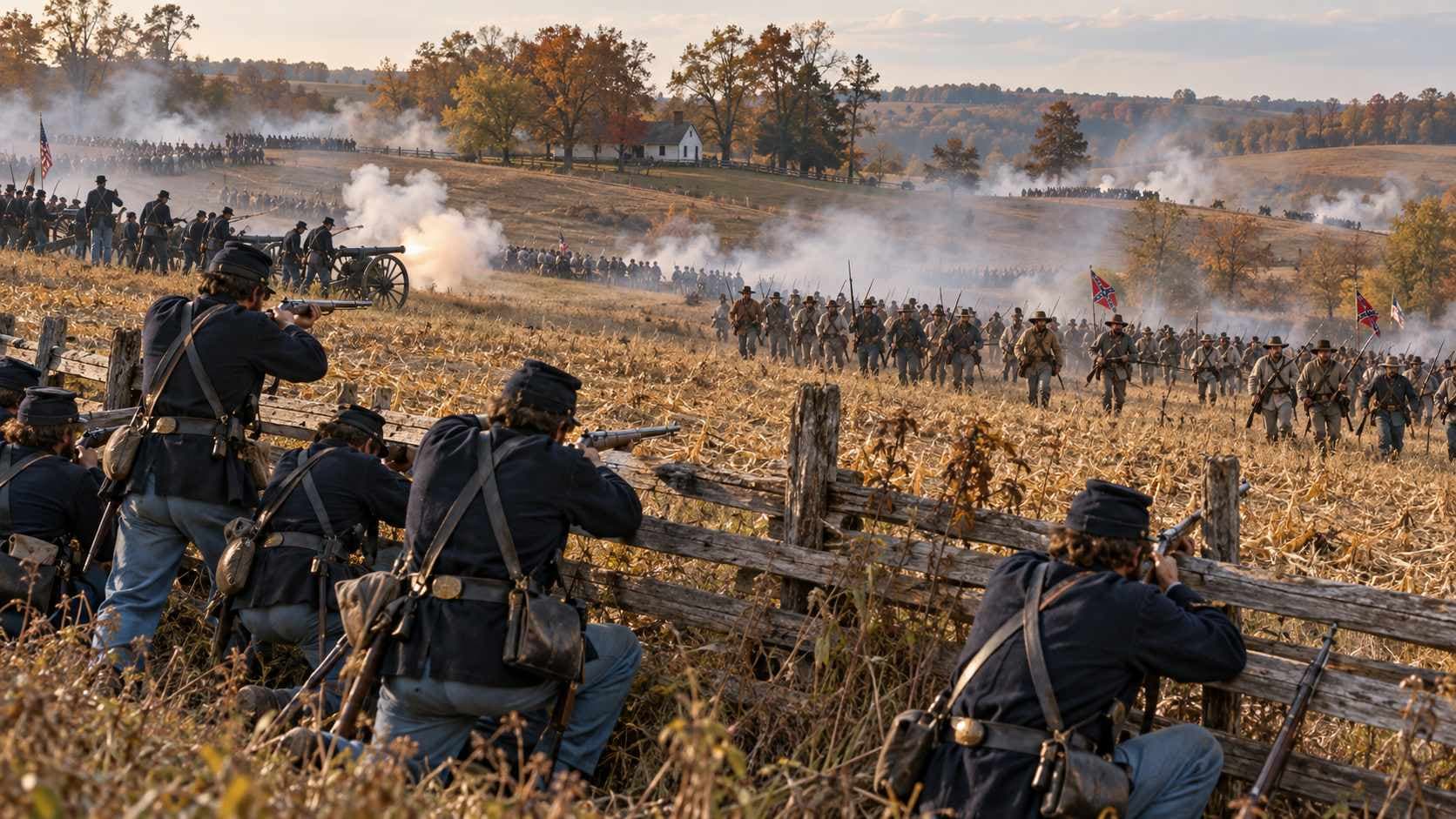
On October 7, Burgoyne sent approximately 1,700 men forward to investigate the American lines, obtain supplies and assess possible artillery positions. General Horatio Gates responded by sending troops against different parts of the British formation. Daniel Morgan’s riflemen attacked its right, Enoch Poor’s brigade its left, and Ebenezer Learned’s brigade the center.
The fortification that changed the result
The British advance was driven back toward its defenses. American attacks did not succeed everywhere: Balcarres Redoubt remained uncaptured. At Breymann’s Redoubt, however, reinforced American troops, urged forward by Benedict Arnold, broke through. Capturing that position made the British defensive situation substantially worse. The distinction matters because the victory came from a particular breach, rather than the simultaneous collapse of every British work.
From defeat to surrender
Burgoyne withdrew north after the battle. Retreat did not restore his supplies or open a reliable escape route, and negotiations followed. His army surrendered on October 17. October 7 and October 17 mark different stages of the same crisis: first the defeat at Bemis Heights, then the surrender that ended the campaign.
How to understand Saratoga’s turning point
Saratoga shows why military outcomes depend on more than who holds the ground at sunset. The British had retained the field in September without achieving freedom of movement. In October, losing a defensive position compounded their logistical problems. Reading the two battles together explains how successive engagements could turn an invasion into the surrender of an army.
Sources
Found an error? Send a correction. Read our editorial standards.